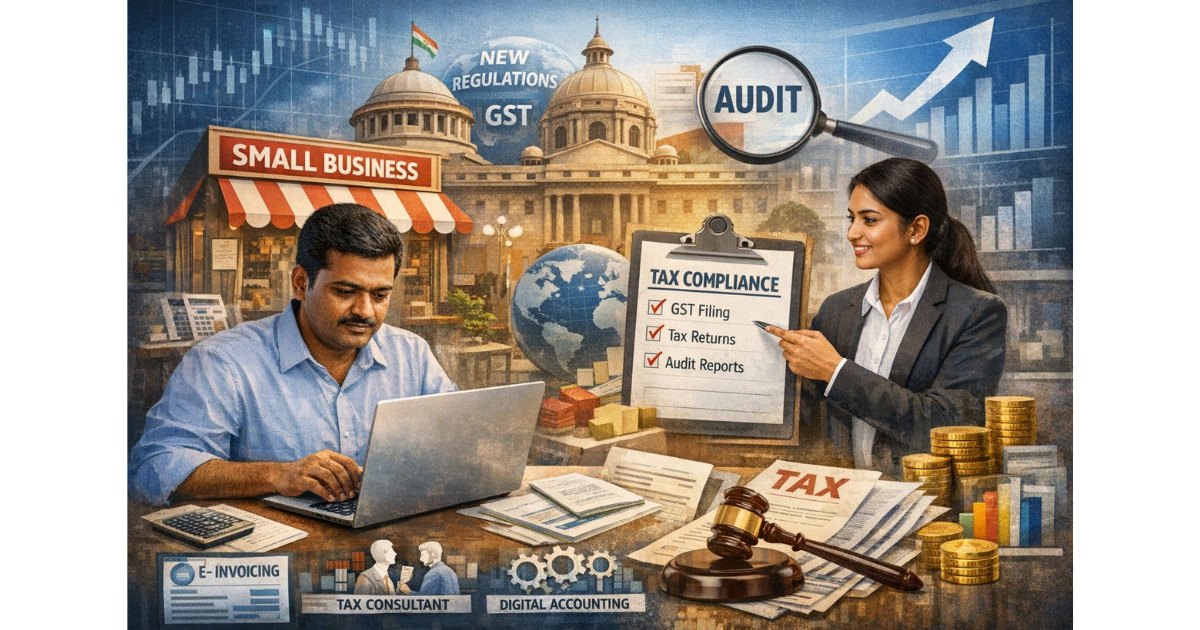
Small businesses navigating new compliance and taxation norms with digital tools, professional guidance, and streamlined processes to stay ahead in a changing regulatory landscape.
As governments around the world recalibrate tax frameworks and tighten regulatory oversight, small businesses find themselves at a critical juncture. Once the domain of mom‑and‑pop shops and informal workshops, today’s micro, small, and medium enterprises (MSMEs) must navigate an increasingly complex compliance landscape—one that promises long‑term benefits but demands rapid adaptation. In countries from the United States to India to emerging markets, the message is clear: compliance is no longer optional, and adaptation is a competitive necessity.
The Compliance Imperative
Small businesses have traditionally operated with lean teams and minimal overheads. However, evolving legal norms are reshaping that landscape. In the United States, sweeping legislative changes such as the One Big Beautiful Bill Act(H.R.1) introduced in July 2025 have expanded employer responsibilities, altered tax deductions, and reworked long‑term incentives, forcing even smaller firms to reassess their reporting structures and tax strategies. The sheer breadth of the act—covering income tax brackets, deductions for overtime pay, and employment tax liabilities—has widened the scope of compliance for firms that once focused narrowly on sales and payroll taxes.
This trend isn’t confined to developed economies. Across the Asia‑Pacific, authorities like the Australian Taxation Office (ATO) have signaled a more assertive compliance focus for small businesses, particularly around GST reporting and claimed tax boosts. Businesses with histories of late filings or incorrect claims are now being moved to more frequent reporting cycles—a move that proponents say builds better business habits but critics say adds pressure on operational bandwidth.
India’s GST Evolution: Simplification Meets Strain
In India, the evolution of the Goods and Services Tax (GST)—one of the country’s boldest taxation reforms—continues to play out with direct implications for MSMEs. Introduced to replace a complex web of state and central levies with a unified tax system, GST simplified the process on paper. Yet small businesses continue to feel the strain of compliance costs, frequent return filings, and technological requirements. According to recent reports, many MSMEs face high compliance costs amidst over 1,450 regulatory obligations annually across multiple laws, a burden that underscores the gap between policy intent and practical implementation.
Despite this, GST has also delivered tangible benefits. Higher exemption thresholds, simplified composition schemes, and the ability to file quarterly returns have given many small firms breathing space. This is especially true for businesses with turnover below Rs 5 crore, which are exempt from monthly return filing and can focus more on growth activities.
Yet the story isn’t uniform. Even as compliance mechanisms become more digital and streamlined, challenges such as input tax credit (ITC) denials, multiple slab confusion, and invoice matching persist—encouraging smaller enterprises to rethink their internal systems and invest in compliance readiness.
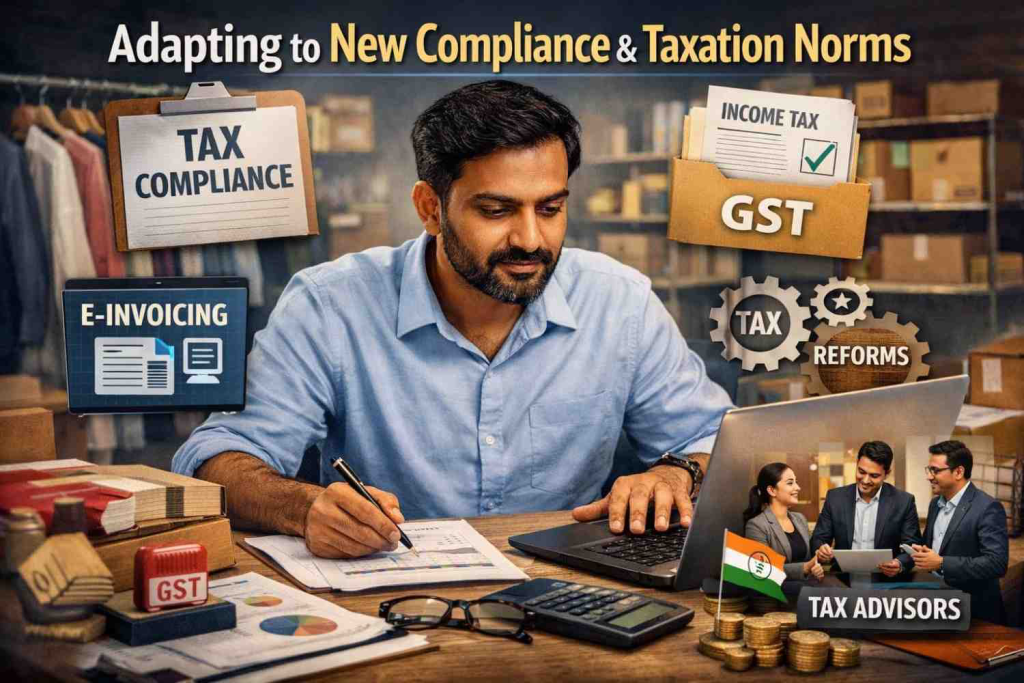
Strategies of Adaptation
Across regions, successful small businesses are adapting in multiple ways:
1. Embracing Digital Compliance Tools
One of the most notable shifts has been the adoption of digital accounting and reporting platforms. Businesses that once managed books with manual ledgers are now turning to cloud‑based accounting solutions to automate tax filings, monitor compliance deadlines, and generate real‑time reports. Previous case studies from other jurisdictions show that leveraging technology not only streamlines compliance but also enhances scalability and reduces human error.
In India, the push toward e‑invoicing and digital GST returns has similarly driven businesses to integrate software into their workflows. While this transition can be steep for early‑stage firms, those that invest upfront in technology see dividends in reduced penalties and faster processing times.
2. Leveraging Simplified Tax Schemes
Many MSMEs are exploring tailored taxation schemes to lessen their burden. In India, for instance, the presumptive taxation provisions under Sections 44AD and 44ADA of the Income Tax Act allow eligible firms to pay tax on a simplified basis without extensive record‑keeping and audits. This strategy is especially appealing for service professionals and micro‑enterprises who lack in‑house tax expertise.
Similarly, opting for composition schemes under GST enables small sellers to pay a fixed percentage of turnover instead of navigating multiple tax slabs—reducing both tax cost and compliance complexity.
3. Outsourcing Expertise
Small firms are increasingly turning to external experts for compliance and advisory support. Chartered accountants, tax consultants, and compliance firms provide critical know‑how that many MSMEs simply don’t have internally. This shift is evident in online communities where business owners report a growing reliance on professional support to avoid costly errors and optimize tax planning.
4. Process Re‑Engineering and Training
Beyond technology and advisors, businesses are redesigning internal processes. Adopting disciplined record‑keeping, scheduled compliance calendars, and staff training on statutory requirements is no longer optional. Firms that proactively educate their teams on tax deadlines and regulatory changes reduce the risk of penalties and improve their operational resilience.
Some micro‑enterprises also collaborate with peers to share insights and jointly negotiate better rates for compliance software or training—highlighting the importance of collective action in an increasingly regulated environment.
Balancing Burden and Opportunity
The push toward compliance isn’t simply about enforcement. Governments recognize that a formalized, compliant small business sector strengthens the broader economy. Simplified GST reforms aimed at reducing slab complexity and lowering compliance hurdles are expected to expand the formal economy and improve liquidity for MSMEs. These changes—part of a broader GST “2.0” initiative—are designed to foster inclusivity, reduce tax disputes, and align India’s tax regime with international best practices.
However, business owners argue that true simplification requires ongoing effort—from rationalising regulatory overlaps to extending digital infrastructure and support. As one industry report noted, high compliance costs and frequent legislative changes make it difficult for small enterprises to focus on innovation and growth.
Looking Ahead
For small businesses, the future of compliance will likely be shaped by a mix of policy evolution, digital innovation, and strategic adaptation. Governments are signaling support through relief measures, technology integration, and simplified reporting frameworks. But the onus rests with MSMEs themselves to build systems that not only meet legal mandates but also unlock strategic advantages—from better financial transparency to stronger investor confidence.
In this era of rising regulatory sophistication, small businesses that thrive won’t be the ones that merely comply. They will be the ones that adapt, anticipate, and innovate—transforming compliance from a cost centre into a catalyst for sustainable growth.
Also read : https://newsestate.in/how-recent-policy-decisions-could-influence-indias-economic-growth-outlook/
Add theweeklynews.in as a preferred source on google – click here
Last Updated on: Thursday, January 22, 2026 1:21 pm by The Weekly News Team | Published by: The Weekly News Team on Thursday, January 22, 2026 1:21 pm | News Categories: News
About The Author