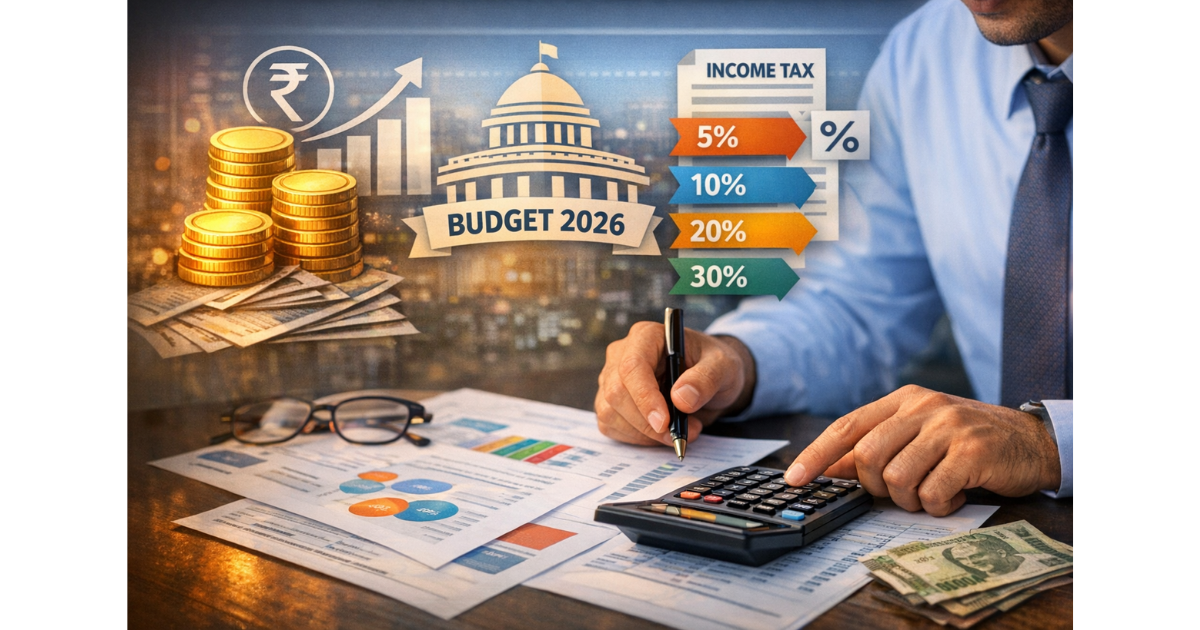
“Budget 2026 Expectations: Potential changes in personal income tax slabs could impact salaried employees’ take-home pay and financial planning.”
New Delhi: As India approaches the Union Budget 2026, salaried employees across the country are closely watching for any announcements that could reshape their financial planning. Personal income tax, a cornerstone of household budgets, is expected to undergo possible revisions that could impact disposable incomes, savings, and investment strategies. Analysts and citizens alike are speculating on how adjustments to tax slabs, exemptions, and rebates could affect the everyday finances of working professionals.
Anticipated Adjustments in Tax Slabs
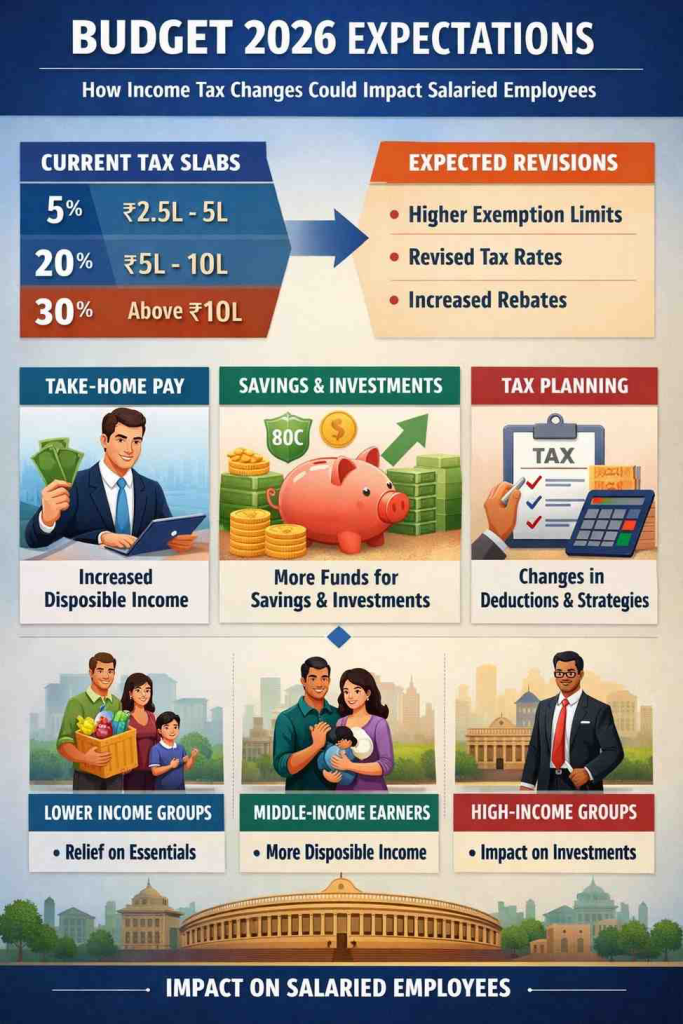
Experts suggest that the government may consider increasing the income thresholds for existing tax slabs to account for inflation and rising living costs. This means that a larger portion of an individual’s income could fall under lower tax brackets, effectively reducing the overall tax burden. For salaried employees, this could translate into higher monthly take-home pay and improved liquidity for day-to-day expenses. Economists argue that such changes could also stimulate consumer spending, providing a boost to the broader economy.
Impact on Savings and Investments
Any modifications in personal income tax rates could directly influence how employees approach savings and investments. For instance, a reduced tax liability may encourage more individuals to invest in retirement funds, insurance schemes, and tax-saving instruments under Section 80C of the Income Tax Act. Conversely, higher tax exemptions for specific income segments might also decrease the urgency for aggressive tax planning, giving professionals more flexibility in choosing investment options based on returns rather than tax benefits.
Considerations for Middle-Income Groups
Middle-income salaried employees are likely to be the most affected by changes in tax slabs. Analysts note that even a marginal increase in the exemption limit could significantly improve disposable income for families managing household expenses, education fees, and health-related costs. On the other hand, any reduction in deductions or removal of certain exemptions may offset these gains, underscoring the importance of monitoring both rate changes and allowable deductions.
Corporate Payroll Implications
Adjustments in tax slabs will also have implications for employers, especially in terms of payroll processing and compliance. Companies may need to recalibrate salary structures, revise tax deduction at source (TDS) calculations, and communicate changes effectively to employees. This could involve recalculating provident fund contributions, professional tax, and other payroll components tied to income thresholds, ensuring that employees benefit from the revised slabs without errors or delays.
Public Sentiment and Expectations
Surveys and financial polls suggest that salaried employees are largely hopeful for measures that provide tangible relief. There is a growing demand for tax structures that are simple, transparent, and aligned with contemporary cost-of-living pressures. Many citizens are also advocating for digital tools and advisory services to help them navigate new tax rules efficiently, reducing confusion and enhancing compliance.
Looking Ahead
While speculation remains, the Union Budget 2026 promises to be a critical moment for salaried individuals. The exact structure of personal income tax changes, exemptions, and rebates will determine not only household finances but also broader economic behavior, influencing consumption patterns, savings habits, and investment decisions. As the Finance Ministry prepares its announcements, employees and financial advisors are bracing for a blend of relief measures and strategic fiscal planning that could redefine personal finance for millions of Indians.
Add theweeklynews.in as a preferred source on google – click here
Last Updated on: Wednesday, January 28, 2026 1:33 pm by The Weekly News Team | Published by: The Weekly News Team on Wednesday, January 28, 2026 1:33 pm | News Categories: News
About The Author