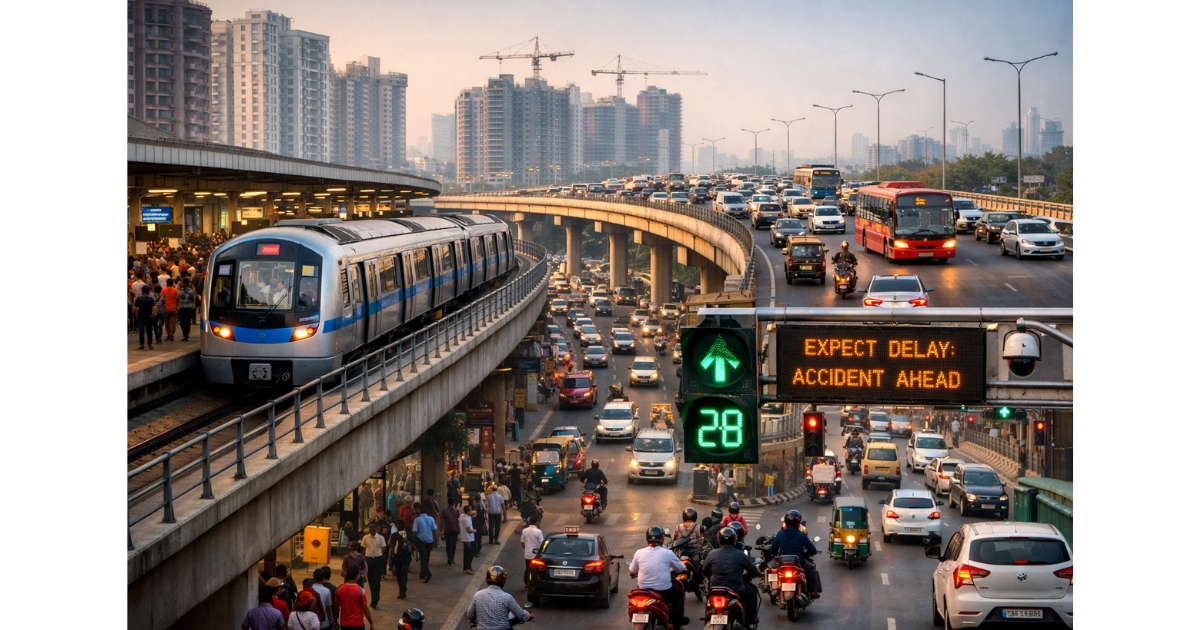
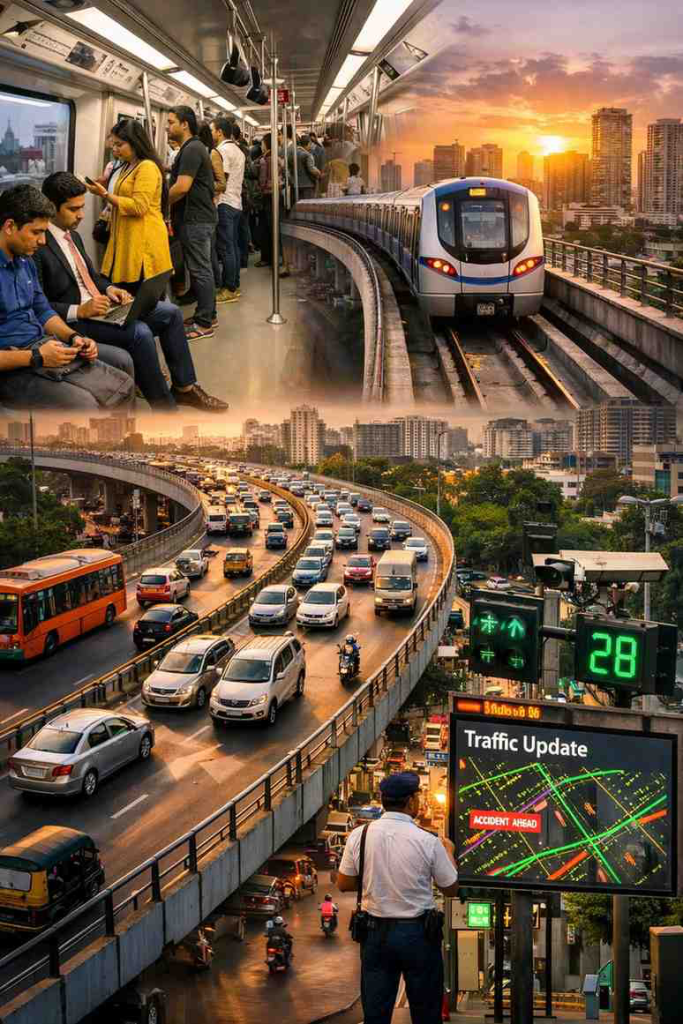
New metro corridors, elevated roads, and smart traffic systems are transforming daily commutes across major Indian cities.
India’s urban landscape is undergoing one of the most significant transformations since the post-liberalisation era. Across metropolitan cities and fast-growing Tier-2 urban centres, large-scale infrastructure projects are reshaping how millions of citizens travel to work, school, hospitals and markets every day. From new metro corridors and elevated roads to smart traffic systems and multi-modal transport hubs, daily commutes are slowly but steadily becoming faster, safer and more predictable—though not without transitional challenges.
A Shift From Congestion to Connectivity
For decades, Indian cities struggled with traffic congestion, unplanned growth and inadequate public transport. Rapid urbanisation led to longer commute times, increased pollution and rising stress levels among working professionals. The latest wave of urban infrastructure projects marks a decisive shift towards connectivity-led planning, where reducing travel time and improving last-mile access have become central goals.
Cities like Delhi, Mumbai, Bengaluru, Hyderabad, Chennai and Pune are witnessing an expansion of metro rail networks that now extend beyond core urban areas into suburbs and satellite towns. This expansion has helped thousands of commuters move away from overcrowded roads and unreliable bus services, significantly cutting down peak-hour travel times.
Metro Rail Expansion Redefines Daily Travel
Metro rail systems have emerged as the backbone of urban mobility. New corridors, interchange stations and extended routes are connecting residential zones with business districts, IT hubs and industrial clusters. In cities such as Delhi and Bengaluru, commuters who once spent over two hours in traffic are now completing the same journeys in under an hour.
The introduction of driverless trains on select routes, improved frequency during peak hours and integrated ticketing systems has further enhanced commuter confidence. Importantly, metro connectivity has encouraged a modal shift away from private vehicles, easing pressure on city roads and contributing to lower fuel consumption.
Elevated Corridors and Flyovers Ease Bottlenecks
Alongside metro development, state governments and urban local bodies have invested heavily in elevated corridors, flyovers and underpasses to address chronic traffic bottlenecks. These projects are particularly visible in cities with high vehicle density, where traditional road widening is no longer feasible.
Elevated roads in Bengaluru and Hyderabad, for instance, are allowing uninterrupted travel across key arterial routes. While construction phases often cause temporary inconvenience, the long-term impact has been a noticeable reduction in signal wait times and smoother movement for both private and commercial vehicles.
Suburban Rail and Regional Connectivity Get a Boost
Daily commuters living on city outskirts are benefiting from revived suburban rail networks and regional rapid transit systems. Projects aimed at linking urban cores with peripheral towns are changing the geography of employment by making longer-distance commutes more viable.
This improved regional connectivity has also eased housing pressure in central areas, as professionals are increasingly choosing to live farther away without compromising on travel convenience. For cities like Mumbai, where suburban trains remain a lifeline, infrastructure upgrades and new corridors are helping manage ever-growing passenger volumes.
Smart Traffic Systems and Digital Mobility Solutions
Beyond physical infrastructure, cities are embracing technology-driven solutions to improve traffic management. Adaptive traffic signals, real-time traffic monitoring, GPS-enabled buses and mobile apps providing live commute updates are becoming part of everyday urban life.
These smart systems allow authorities to respond quickly to congestion, accidents or weather disruptions. For commuters, access to real-time information has made planning journeys easier and reduced uncertainty during peak hours.
Impact on Working Professionals and Students
The most visible beneficiaries of improved urban infrastructure are working professionals and students. Shorter and more reliable commutes have translated into better work-life balance, reduced fatigue and higher productivity. Parents report safer and more predictable school travel for children, while women commuters benefit from improved lighting, surveillance and station design across public transport networks.
Employers, too, are adapting by aligning office timings with improved transport availability, further optimising urban work patterns.
Environmental and Health Benefits Begin to Emerge
As more commuters shift to public transport, cities are witnessing early signs of environmental improvement. Reduced vehicular emissions, lower fuel consumption and declining noise pollution are emerging as indirect but critical benefits of modern infrastructure.
Health experts point out that shorter commutes reduce daily stress levels and exposure to air pollution. Additionally, improved pedestrian pathways and cycling infrastructure in select cities are encouraging more active modes of travel.
Challenges During the Transition Phase
Despite clear long-term gains, the transition has not been seamless. Construction-related disruptions, temporary road closures and dust pollution remain common complaints among residents. Coordination between multiple agencies and delays in project execution have also tested public patience.
However, urban planners argue that these short-term challenges are inevitable in cities undergoing transformation at such scale. Transparency in project timelines and better communication with citizens are increasingly being emphasised to maintain public trust.
The Road Ahead for Urban Mobility in India
India’s urban infrastructure push signals a long-term commitment to sustainable and inclusive mobility. Upcoming projects focusing on electric buses, integrated transport cards, pedestrian-friendly streets and transit-oriented development are expected to further redefine daily commutes.
As cities continue to grow, the success of these initiatives will depend on consistent policy support, timely execution and citizen cooperation. For millions of urban Indians, the daily journey to work is no longer just about reaching a destination—it is becoming a measure of how effectively cities are preparing for the future.
Also read :https://newsestate.in/how-recent-policy-decisions-could-influence-indias-economic-growth-outlook/
Add theweeklynews.in as a preferred source on google – click here
Last Updated on: Monday, February 2, 2026 5:16 pm by The Weekly News Team | Published by: The Weekly News Team on Monday, February 2, 2026 5:15 pm | News Categories: News
About The Author