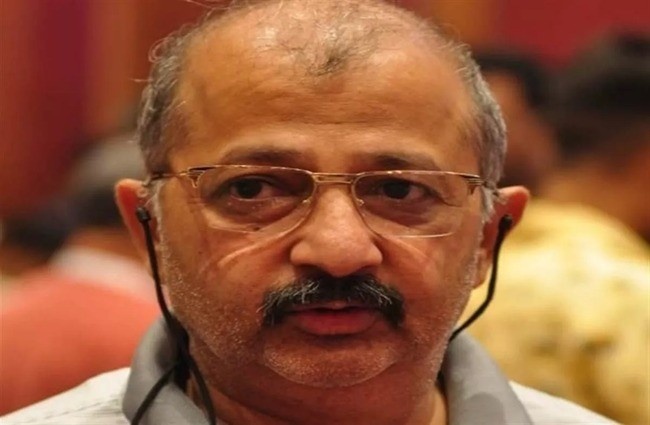
BJP leader claims forged communication circulated in RSS chief’s name aims to mislead voters; Congress yet to respond
New Delhi, April 8: BJP leader Rajiv Tuli on Tuesday alleged that a fake letter purportedly issued in the name of the Rashtriya Swayamsevak Sangh (RSS) is being circulated during the ongoing election campaign in Assam, calling it an attempt to mislead voters and influence the political narrative.
Tuli claimed that the letter, which is said to be written by the RSS chief to the Prime Minister, is fabricated and part of what he described as “dirty politics.” He alleged that the circulation of such material is linked to Congress-linked social media efforts, though no official confirmation of its origin has been provided.
Allegations of Forgery and Misinformation
According to Tuli, the document carries a forged signature and uses inappropriate language, which he said undermines its credibility. He claimed that even a basic reading would raise doubts about its authenticity.
The letter reportedly refers to internal developments within the Assam BJP and raises concerns about allegations involving the state’s leadership. Tuli dismissed it as a “farcical attempt” to create confusion among voters.
Claims on RSS Functioning
Tuli argued that the content of the letter does not align with the functioning of the RSS. He said the organisation does not issue directions to affiliated groups through public letters, unlike political parties.
He explained that the RSS typically addresses issues through internal discussions and coordination meetings rather than formal public communication, and suggested that the forged letter reflects a lack of understanding of the organisation’s structure.
Political Reactions and Accusations
The BJP leader also criticised recent remarks made by Congress president Mallikarjun Kharge regarding the RSS and the BJP, calling them inappropriate and potentially divisive. He alleged that such statements, along with the circulation of the letter, could contribute to social tensions during the election period.
Tuli further accused the Congress of attempting to bring the RSS into electoral debates for political gain, suggesting that such tactics indicate a lack of substantive issues in the campaign.
Broader Political Context
The controversy comes amid intensified campaigning in Assam, where political rhetoric has escalated in the run-up to polling. Allegations of misinformation and the use of forged or misleading content have become a recurring concern during elections.
However, no independent verification of the letter’s origin or authenticity has been publicly confirmed so far, and the Congress has not issued an official response to the specific allegations at the time of reporting.
Public Impact
The circulation of unverified or misleading material during elections can affect voter perception and trust. Authorities and election bodies often caution against the spread of misinformation, particularly during sensitive campaign periods.
Ensuring the authenticity of political communication remains a key challenge in the digital age, especially with the rapid spread of content on social media platforms.
Conclusion
As the controversy unfolds, clarity on the origin of the alleged letter and responses from concerned parties are expected to shape the narrative. The incident highlights ongoing concerns around misinformation in election campaigns and the need for vigilance among both voters and authorities. (With inputs from H.S.)
Inputs & Images courtesy: Hindusthan Samachar (H.S.)
Edited by: Dikshita Bollu
Last Updated on: Tuesday, May 26, 2026 4:07 pm by Bollu Dikshitha | Published by: Bollu Dikshitha on Wednesday, April 8, 2026 3:03 pm | News Categories: India
About The Author