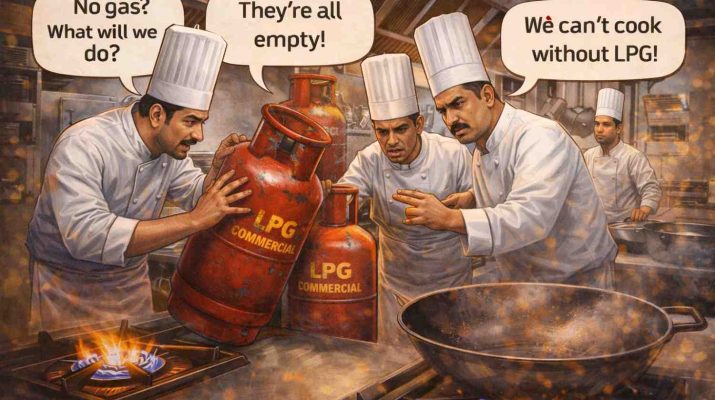
LPG Supply Crisis Raises Alarm Across India’s Hospitality Sector
A sudden shortage of commercial liquefied petroleum gas (LPG) cylinders has triggered concern across India’s hospitality industry, with restaurants and hotels in major cities such as Bengaluru and Mumbai warning of possible shutdowns. The disruption comes amid global energy supply tensions linked to the ongoing West Asia conflict involving Iran and Israel, which has affected key shipping routes used for LPG imports.
Industry bodies say the shortage of 19-kg commercial LPG cylinders — the primary cooking fuel for restaurants, hotels, and food stalls — has already disrupted kitchen operations in several metropolitan areas. Associations representing the hospitality sector have warned that if supplies are not restored quickly, large numbers of eateries may be forced to suspend operations in the coming days.
In response, the central government has directed refineries to increase LPG production by about 10% and prioritise domestic consumption to stabilise supply.
Why Commercial LPG Is Suddenly in Short Supply
The shortage is largely linked to disruptions in global energy supply chains due to geopolitical tensions in West Asia. The Strait of Hormuz — one of the world’s most critical oil and gas shipping corridors — has been affected by the escalating conflict, raising concerns about energy shipments moving through the region.
India relies heavily on imports to meet its LPG demand. According to industry data, about 62% of the country’s LPG requirement is imported, and a large share of these shipments normally pass through the Strait of Hormuz.
Any disruption along this route can quickly ripple through the supply chain, affecting availability for commercial and industrial consumers.
At the same time, the government has prioritised LPG distribution for household consumption to ensure domestic cooking gas remains available. This policy has unintentionally tightened supplies for commercial users such as restaurants, hotels, and small food businesses.
Bengaluru Hotels Warn of Immediate Shutdown Risk
Restaurant and hotel operators in Bengaluru say commercial LPG deliveries have slowed drastically over the past few days.
The city’s hotel associations have reported that many establishments received only a fraction of their usual gas supply, with some claiming deliveries have stopped entirely. With most restaurants maintaining only a few days’ worth of LPG stock, operators warn that kitchens could shut down quickly if supplies are not restored.
Industry representatives say the disruption could significantly affect daily life in the city, as thousands of residents rely on restaurants and small eateries for regular meals.
Food businesses in Bengaluru — particularly those serving high-volume dishes such as dosas, idlis, and meals — require continuous high-flame burners powered by LPG. Even a short disruption can halt operations entirely.
Mumbai Hospitality Sector Already Feeling the Impact
The situation in Mumbai appears equally serious.
Hospitality industry groups report that a significant number of restaurants have already been forced to suspend operations due to a lack of commercial LPG cylinders. In some areas, dealers say supply of commercial cylinders has been halted, leaving eateries scrambling to secure fuel through alternative channels.
Industry associations estimate that around 20% of hotels and restaurants in Mumbai have temporarily shut down, warning that closures could increase if the shortage persists.
Restaurant operators say the sudden supply disruption has also led to long queues at LPG distributors and fears of hoarding or black-market activity.
Government Steps In: Refineries Ordered to Boost Production
To address the situation, the Ministry of Petroleum and Natural Gas has directed oil refineries to increase LPG output and divert more fuel toward domestic consumption.
Officials have instructed refineries to maximise LPG production by adjusting petrochemical streams and optimising refinery operations. The additional output will primarily be used to stabilise supplies within the country.
The government has also introduced measures aimed at preventing panic buying and hoarding, including extending the minimum interval between domestic LPG refill bookings to 25 days.
Authorities say essential non-domestic sectors — including hospitals and educational institutions — will continue to receive priority supply even as commercial deliveries remain constrained.
Price Increases Add to Pressure on Restaurants
The supply disruption has coincided with recent price increases for LPG cylinders.
The price of household LPG cylinders was raised by ₹60, while commercial LPG cylinders used by restaurants and hotels saw an increase of about ₹115 earlier this month.
Overall, commercial LPG prices have risen by more than ₹300 since the beginning of the year, significantly raising operational costs for the hospitality sector.
For restaurants that rely heavily on LPG for high-flame cooking, the dual impact of rising prices and limited availability is creating a severe operational challenge.
Why Restaurants Depend Heavily on LPG
Unlike household kitchens, restaurant kitchens consume large quantities of LPG every day.
Medium-sized restaurants typically use six to eight cylinders daily, while large establishments may require 10–12 cylinders or more depending on volume.
This makes uninterrupted LPG supply critical for the hospitality sector. Even brief shortages can force businesses to:
- Reduce menu items
- Limit operating hours
- Increase food prices
- Temporarily shut down operations
Small eateries and street food vendors are particularly vulnerable because they often lack backup cooking systems.
Wider Economic Impact if Shortage Persists
Experts warn that prolonged LPG supply disruptions could affect multiple sectors beyond restaurants.
Possible ripple effects include:
- Higher food prices in cities
- Reduced employment in the hospitality sector
- Disruptions for migrant workers and students who depend on affordable eateries
- Increased pressure on alternative fuels such as CNG or electricity
India consumes roughly 31 million tonnes of LPG annually, with about 87% used by households and the remaining portion by commercial establishments.
Because the domestic sector consumes the majority share, government policy typically prioritises household supply during shortages.
Last Updated on: Friday, March 13, 2026 11:32 pm by The Weekly News Team | Published by: The Weekly News Team on Tuesday, March 10, 2026 10:28 pm | News Categories: India
About The Author

