Introduction
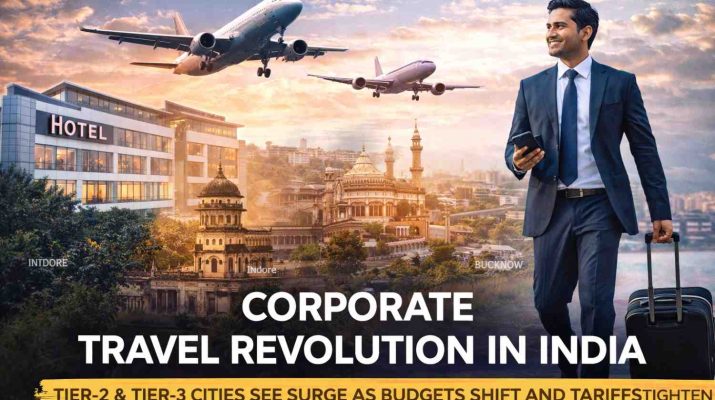
India’s corporate travel landscape is undergoing a structural shift. As companies reassess budgets and respond to rising tariffs in metro hubs, Tier-2 and Tier-3 cities are emerging as key destinations for business travel. This transition reflects a broader recalibration of corporate spending, operational strategy, and regional economic growth.
Recent trends indicate that businesses are increasingly moving meetings, events, and project operations beyond traditional metro centers such as Mumbai, Delhi, and Bengaluru, toward cities like Indore, Coimbatore, and Lucknow. The shift is being driven by cost optimization, infrastructure improvements, and the decentralisation of India’s economic activity.
What Is Driving the Shift to Tier-2 and Tier-3 Cities?
Rising Costs in Metro Cities
Corporate travel budgets are under pressure as accommodation tariffs, transportation costs, and venue expenses continue to rise in major metropolitan areas. Business districts in metros often command premium pricing, making frequent travel and large-scale events increasingly expensive.
As companies seek cost efficiency, Tier-2 and Tier-3 cities offer significantly lower operational costs without necessarily compromising on essential infrastructure.
Improved Connectivity and Infrastructure
The expansion of regional airports, better rail connectivity, and upgraded highways have made smaller cities more accessible than ever. Government-led infrastructure initiatives have also played a role in positioning these cities as viable business hubs.
Cities like Indore and Coimbatore now offer modern convention centers, business hotels, and co-working spaces that can support corporate requirements.
Decentralisation of Business Operations
Organisations are increasingly adopting distributed work models, establishing offices, manufacturing units, and service centers outside metro cities. This decentralisation naturally leads to increased corporate travel to these emerging hubs.
Sectors such as IT services, manufacturing, logistics, and fintech are contributing to this trend.
Changing Corporate Travel Patterns
Shorter, Purpose-Driven Trips
Companies are prioritising efficiency by planning shorter trips with clearly defined objectives. This approach reduces unnecessary expenditure while maintaining productivity.
Growth in Regional Meetings and Events
Instead of hosting large events in metros, companies are organising regional meetings closer to operational centers. This reduces travel time and costs for participants.
Increased Use of Digital Tools
Hybrid meetings and virtual collaboration tools continue to complement physical travel, ensuring that only essential trips are undertaken.
Impact on the Hospitality and Aviation Sectors
Hospitality Sector Expansion
Hotels in Tier-2 and Tier-3 cities are witnessing increased demand from corporate clients. This has led to:
- Expansion of mid-range and business hotels
- Development of conference and meeting facilities
- Increased focus on service quality and standardisation
Hospitality brands are actively investing in these markets to capture growing demand.
Aviation Sector Adjustments
Airlines are expanding routes to connect smaller cities directly with major business hubs. Regional connectivity schemes and rising passenger demand are supporting this expansion.
This shift is also helping decongest major metro airports while improving overall network efficiency.
Economic Implications for Emerging Cities
The rise in corporate travel is contributing to the economic growth of Tier-2 and Tier-3 cities in several ways:
Job Creation
Increased demand for hospitality, transport, and services is generating employment opportunities.
Local Business Growth
Restaurants, local transport providers, and event management companies benefit from higher business activity.
Real Estate Development
Demand for commercial spaces, hotels, and co-working hubs is driving real estate growth.
Challenges That Remain
Despite the positive momentum, certain challenges persist:
Infrastructure Gaps
Not all Tier-2 and Tier-3 cities have consistent infrastructure standards, particularly in terms of public transport and urban planning.
Service Standardisation
Ensuring consistent quality across hospitality and service sectors remains a work in progress.
Limited International Connectivity
While domestic connectivity has improved, direct international links are still limited in many smaller cities.
What This Means for Businesses
For companies, the shift offers both opportunities and strategic considerations:
- Cost Efficiency: Lower travel and accommodation costs
- Operational Reach: Access to new markets and talent pools
- Flexibility: Ability to diversify operations geographically
However, businesses must also invest in planning and logistics to ensure smooth operations in less familiar environments.
Outlook: A Long-Term Structural Shift
The growing prominence of Tier-2 and Tier-3 cities in corporate travel is not a temporary trend but a reflection of deeper economic changes. As infrastructure continues to improve and businesses expand beyond metros, these cities are likely to play an increasingly central role in India’s corporate ecosystem.
For India’s travel, hospitality, and business sectors, this shift represents both a challenge and an opportunity—to adapt, innovate, and align with the evolving geography of growth.
Conclusion
India’s corporate travel revolution is redefining traditional patterns, moving beyond metro-centric models to a more distributed and cost-conscious approach. The rise of Tier-2 and Tier-3 cities as business travel destinations underscores the country’s broader economic transformation.
As companies continue to optimise budgets and explore new growth avenues, these emerging cities are set to become integral to India’s corporate travel map—reshaping how and where business gets done.
Last Updated on: Thursday, March 5, 2026 12:18 am by The Weekly News Team | Published by: The Weekly News Team on Wednesday, March 4, 2026 8:23 pm | News Categories: Business
About The Author

