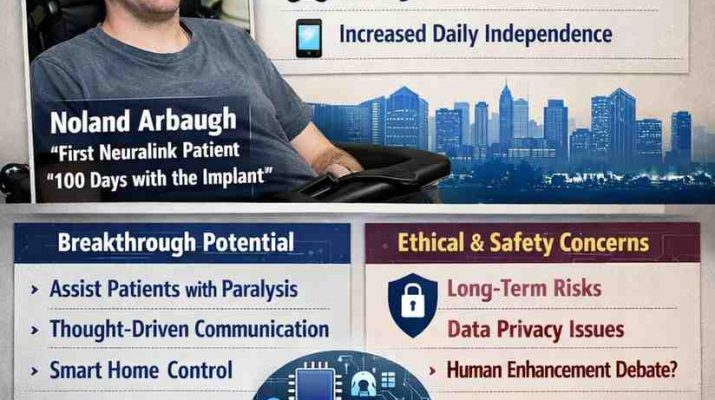
In a major milestone for neurotechnology and human-machine integration, Noland Arbaugh — the first known human recipient of a brain-computer interface implant from Neuralink — has shared an update marking his 100th day living with the device.
The development has renewed global interest in the ambitious project backed by entrepreneur Elon Musk, which aims to enable direct communication between the human brain and digital systems.
Arbaugh’s experience offers one of the earliest real-world glimpses into how advanced neural implants could transform mobility, communication, and assistive technology in the coming years. 🧠⚡
What Is Neuralink Trying to Achieve?
Neuralink is developing implantable brain-computer interfaces (BCIs) designed to interpret neural signals and translate them into commands for external devices. The long-term vision includes restoring lost motor functions, treating neurological conditions, and eventually enhancing human cognitive capabilities.
The implant is surgically placed in the brain and connected to a wireless system that transmits signals to a computer or smartphone.
Experts describe this field as a convergence of neuroscience, artificial intelligence, robotics, and biomedical engineering — with potentially transformative implications for healthcare.
Noland Arbaugh’s 100-Day Experience
According to his public update, Arbaugh has been able to use the implanted device to interact with digital interfaces in ways that were previously difficult due to physical limitations.
Reported improvements include:
- Controlling a computer cursor through neural activity
- Engaging in online activities such as gaming and communication
- Performing daily digital tasks with increased independence
His update has been widely viewed as a proof-of-concept moment for practical brain-computer interface applications.
However, researchers caution that such early experiences are part of controlled clinical trials and require long-term monitoring to evaluate safety, reliability, and effectiveness.
Potential Benefits for Patients With Paralysis
One of Neuralink’s primary objectives is to help individuals with spinal cord injuries or neurological disorders regain functional autonomy.
Brain-chip implants could enable:
- Communication through thought-driven typing systems
- Wheelchair or prosthetic limb control
- Interaction with smart home environments
- Access to education and employment opportunities
Medical experts say these technologies could significantly improve quality of life for patients with severe mobility impairments.
Challenges and Ethical Questions
Despite the technological excitement, neural implants raise complex ethical and regulatory issues.
Safety and Long-Term Effects
Implanted devices must demonstrate durability and minimal adverse effects over extended periods.
Data Privacy and Security
Direct brain-data transmission introduces new concerns around personal privacy and cybersecurity.
Accessibility and Cost
Ensuring equitable access to advanced neurotechnology remains a significant challenge.
Human Enhancement Debate
Beyond medical use, questions persist about whether such technologies could eventually be used to augment normal cognitive abilities.
Policymakers and bioethicists are closely monitoring developments as clinical trials progress.
Global Race in Brain-Computer Interfaces
Neuralink is not alone in pursuing BCI innovation. Academic institutions and technology firms worldwide are investing heavily in neurotechnology research.
The growing competition reflects the potential commercial and humanitarian impact of successful brain-machine integration solutions.
Industry analysts believe that regulatory approvals, clinical outcomes, and public trust will play decisive roles in shaping the pace of adoption.
Market and Innovation Implications
Breakthroughs in neural implants could influence multiple sectors, including healthcare, consumer electronics, gaming, and artificial intelligence.
Investors are increasingly tracking developments in neurotechnology startups, viewing them as part of the next frontier in deep-tech innovation.
For India and other emerging economies, advancements in assistive technology could open new opportunities in medical device manufacturing and digital health services.
What Comes Next for Neuralink Trials?
Clinical testing phases typically involve:
- Monitoring device stability and signal quality
- Evaluating patient usability feedback
- Expanding participant cohorts
- Seeking regulatory clearances
Arbaugh’s update may accelerate interest in enrolling more volunteers for future trials, subject to safety assessments and ethical approvals.
Conclusion
The 100-day update from the first human recipient of a Neuralink brain implant marks a significant moment in the evolution of brain-computer interfaces. While the technology remains in experimental stages, early signs of functional benefit have sparked optimism about its long-term potential.
As Elon Musk’s ambitious neurotechnology venture continues to push scientific boundaries, the coming years will determine whether brain-chip implants transition from groundbreaking trials to mainstream medical solutions. 🧬🚀
Last Updated on: Monday, March 23, 2026 10:00 pm by The Weekly News Team | Published by: The Weekly News Team on Monday, March 23, 2026 2:58 pm | News Categories: Technology
About The Author

