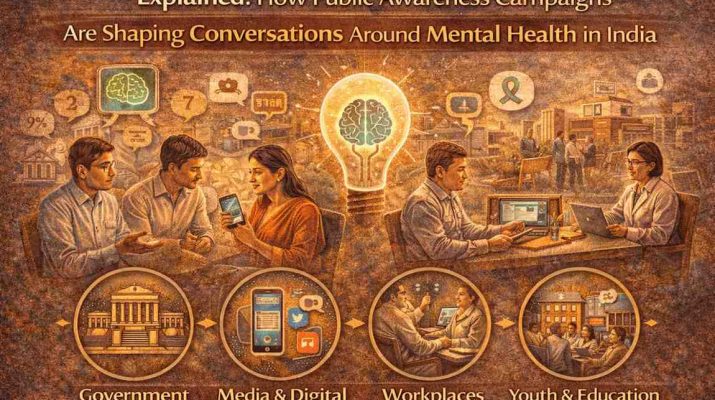
Mental health, once a deeply stigmatised and rarely discussed subject in India, is gradually moving into the public conversation. Over the past decade, public awareness campaigns led by governments, non-profits, healthcare professionals, educational institutions, and even private companies have played a crucial role in changing how mental health is perceived. These efforts are not only encouraging people to talk openly about emotional well-being but are also influencing policy, workplace practices, and healthcare access across the country.
Why Mental Health Awareness Was Long Neglected
For generations, mental health issues in India were often misunderstood or dismissed as personal weakness, family problems, or social failures. Cultural norms prioritised endurance and silence over expression, while lack of awareness and limited access to professional care compounded the problem. Many people avoided seeking help due to fear of judgment, discrimination, or social exclusion.
This silence had serious consequences. Anxiety, depression, and stress-related disorders often went untreated, affecting productivity, relationships, and overall quality of life. Recognising the scale of the challenge, stakeholders began to focus on awareness as the first step toward change.
Rise of Public Awareness Campaigns
Public awareness campaigns have emerged as powerful tools to challenge stigma and normalise conversations around mental health. These campaigns use mass media, social media, community outreach, and educational programmes to reach diverse audiences across urban and rural India.
By using simple language, relatable stories, and culturally sensitive messaging, campaigns aim to demystify mental health conditions and emphasise that seeking help is a sign of strength rather than weakness. The increased visibility of mental health topics has helped bring them into mainstream discourse.
Role of Government and Public Institutions
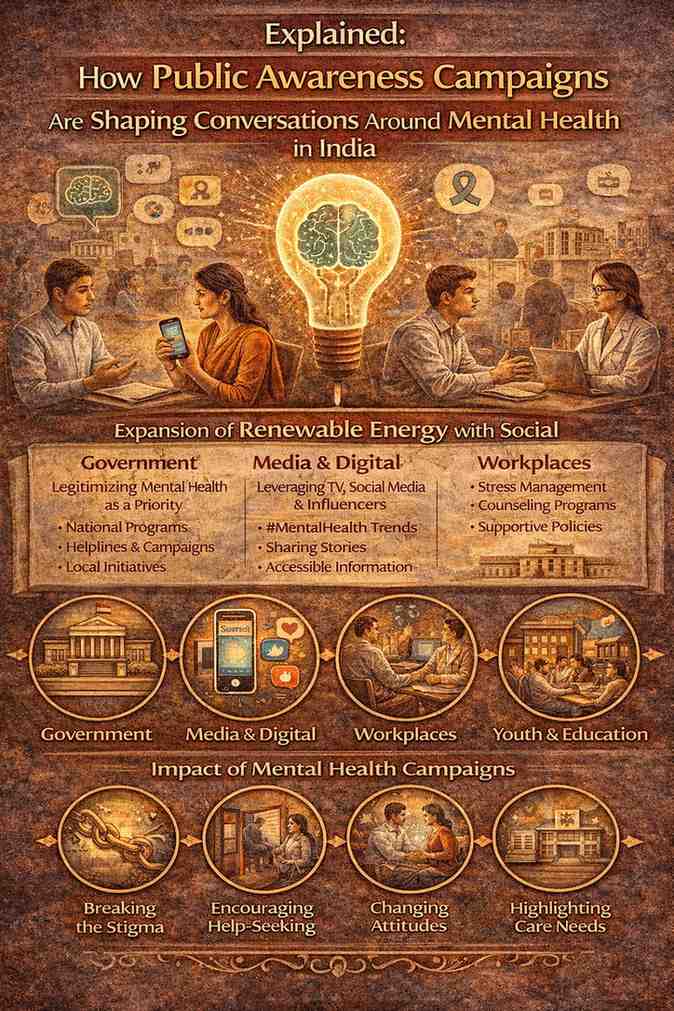
Government-led initiatives have played a significant role in legitimising mental health as a public health priority. Awareness drives linked to national health programmes, school curricula, and public service messaging have helped spread basic understanding of mental well-being and available support systems.
When mental health is addressed through official channels, it sends a strong signal that these issues deserve attention and resources. This institutional backing has encouraged states, schools, and local bodies to engage more actively with mental health awareness.
Influence of Media and Digital Platforms
Media and digital platforms have amplified the reach of mental health campaigns. Television shows, films, news reports, and online content increasingly address themes such as stress, trauma, depression, and therapy. Social media platforms, in particular, have enabled individuals to share personal experiences and coping strategies, creating a sense of community and solidarity.
Hashtags, short videos, and interactive campaigns have made mental health conversations more accessible, especially for younger audiences. While digital spaces also carry risks of misinformation, they have undeniably lowered barriers to discussion.
Workplace Campaigns and Corporate Initiatives
Workplaces are becoming important arenas for mental health awareness. Many organisations now run internal campaigns focusing on stress management, burnout prevention, and emotional well-being. These initiatives often include workshops, counselling support, and open discussions led by professionals.
By acknowledging mental health as a workplace issue, employers help reduce stigma and encourage employees to seek help without fear of professional consequences. This shift reflects a growing understanding that mental well-being is closely linked to productivity and retention.
Impact on Youth and Educational Institutions
Awareness campaigns have had a particularly strong impact on young people. Schools and colleges are increasingly incorporating mental health education into their programmes, teaching students about emotional resilience, self-care, and peer support.
Campaigns targeting youth use age-appropriate messaging and interactive formats to encourage openness. As a result, students are more likely to recognise mental health challenges early and seek help, fostering healthier attitudes that can last into adulthood.
Changing Attitudes and Social Acceptance
One of the most significant outcomes of sustained awareness efforts is a gradual shift in public attitudes. Conversations around therapy, counselling, and emotional well-being are becoming more common in families and social circles. While stigma has not disappeared, there is greater empathy and understanding than in the past.
Public figures, including athletes, artists, and professionals, sharing their mental health journeys have further normalised these conversations. Their openness helps challenge stereotypes and makes it easier for others to speak up.
Gaps Between Awareness and Access to Care
Despite progress in awareness, access to quality mental healthcare remains uneven. Many regions face shortages of trained professionals, affordable services, and infrastructure. Awareness campaigns can encourage people to seek help, but without adequate systems in place, this demand can go unmet.
Bridging the gap between awareness and access is now a critical challenge. Campaigns increasingly highlight helplines, digital counselling platforms, and community-based support as interim solutions, but long-term investment in mental healthcare is essential.
Risks of Oversimplification and Misinformation
As mental health conversations become more widespread, there is also a risk of oversimplification. Not all emotional distress is the same, and serious conditions require professional diagnosis and treatment. Awareness campaigns must strike a balance between encouraging openness and promoting accurate information.
Responsible messaging that avoids trivialising mental illness or promoting self-diagnosis is crucial to ensuring that awareness leads to meaningful support rather than confusion.
What This Means for Society
Public awareness campaigns have fundamentally reshaped how mental health is discussed in India. They have helped move the conversation from silence to acknowledgement, from stigma to empathy. While challenges remain, these efforts have laid the foundation for a more informed and compassionate society.
Explained clearly, awareness is not the final solution but a necessary starting point. As conversations continue to evolve, the focus must shift toward building accessible, affordable, and inclusive mental healthcare systems. Together, awareness and action can ensure that mental health is treated with the seriousness and care it deserves across India.
Add theweeklynews.in as preferred source on google – click here
Last Updated on: Thursday, January 22, 2026 1:25 pm by The Weekly News Team | Published by: The Weekly News Team on Thursday, January 22, 2026 1:25 pm | News Categories: India
About The Author

