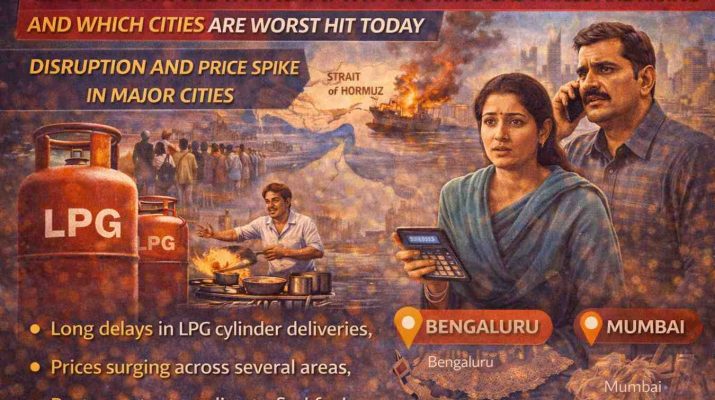
India is facing a sudden liquefied petroleum gas (LPG) shortage in several major metropolitan areas, raising concerns among households, restaurants, and small businesses that rely heavily on cooking gas. The supply disruption comes amid rising geopolitical tensions affecting energy shipping routes near the Strait of Hormuz, a critical corridor for global fuel transportation.
Cities such as Bengaluru and Mumbai have reported delays in LPG cylinder deliveries and sharp price increases. Industry observers say the situation reflects how global conflicts and supply chain disruptions can quickly impact essential commodities in India.
For consumers already coping with fluctuating fuel prices, the sudden spike in LPG costs has triggered widespread concern about household budgets and food service operations.
What Is Causing the LPG Shortage?
The current LPG supply disruption is largely linked to instability affecting energy transportation routes in the Middle East. A significant portion of India’s LPG imports travels through the Strait of Hormuz, one of the world’s most important maritime chokepoints for oil and gas shipments.
Any disruption in this region—whether due to military tensions, shipping delays, or increased insurance costs for tankers—can immediately affect fuel availability in importing countries.
Industry experts point to several contributing factors:
- Delays in LPG tanker shipments due to regional tensions
- Rising freight and insurance costs for shipping companies
- Supply chain bottlenecks at Indian ports
- Increased domestic demand in urban centers
Because India imports a significant share of its LPG consumption, global disruptions can quickly translate into local shortages.
Cities Reporting the Worst Supply Disruptions
The shortage has been particularly noticeable in densely populated urban areas where demand for cooking gas is high.
Bengaluru
In Bengaluru, distributors have reported longer waiting periods for LPG cylinder refills. Some customers say delivery times that usually take two to three days are now extending to nearly a week.
Restaurants and street food vendors in the city have also reported difficulty securing commercial LPG cylinders.
Mumbai
In Mumbai, several neighborhoods have experienced intermittent supply delays. Restaurant owners say the sudden increase in LPG prices has forced them to reconsider menu pricing and cooking operations.
Small eateries, which depend heavily on commercial LPG cylinders, are among the most affected.
Impact on Restaurants and Food Businesses
The LPG shortage has created serious challenges for the hospitality industry, particularly for restaurants and street food vendors.
Commercial cooking operations typically rely on multiple LPG cylinders each day. With supply tightening and prices rising, many establishments are being forced to adjust operations.
Restaurant operators in affected cities say they are taking measures such as:
- Reducing menu items that require long cooking times
- Switching temporarily to alternative fuels where possible
- Adjusting portion sizes
- Revising menu prices
For small eateries operating on narrow margins, even a short-term fuel cost increase can significantly affect profitability.
Why LPG Prices Are Rising
The shortage has coincided with an increase in LPG prices across several markets.
Several factors are contributing to the price surge:
Global Energy Market Volatility
Geopolitical tensions in the Middle East often trigger price fluctuations in oil and gas markets.
Import Dependence
India imports a large share of its LPG requirements, making domestic prices sensitive to international supply disruptions.
Transportation Costs
Shipping fuel through high-risk regions can increase tanker insurance premiums and freight charges, which ultimately affect retail prices.
Distribution Bottlenecks
Supply delays at ports and distribution centers can temporarily tighten availability in urban markets.
Together, these factors are pushing cooking gas prices upward while reducing availability in some areas.
Household Impact Across Urban India
For millions of Indian households, LPG remains the primary cooking fuel. Price increases can therefore have a direct impact on monthly household expenses.
Urban families using subsidized LPG cylinders may still experience delays or partial price increases depending on distribution conditions.
For middle-class households and small businesses, even modest price changes can affect daily spending patterns.
Economists note that cooking gas costs are particularly sensitive because they affect both household consumption and food industry operations.
Government and Industry Response
Energy companies and government agencies are closely monitoring the situation.
Fuel distributors are reportedly working to stabilize supply by adjusting inventory levels and prioritizing high-demand areas.
Authorities may also explore additional measures such as:
- Increasing imports from alternative suppliers
- Re-routing shipments through safer maritime paths
- Expanding storage reserves at domestic terminals
Such steps could help ease supply pressure if disruptions continue.
Broader Energy Security Concerns
The LPG shortage has also renewed discussions about India’s broader energy security strategy.
While the country has made progress in diversifying its energy sources, many critical fuels—including LPG and crude oil—still depend heavily on international supply chains.
Energy analysts say the current situation highlights the importance of:
- Strategic fuel reserves
- Supply diversification
- Domestic energy production
- Alternative cooking fuels
Strengthening these areas could reduce vulnerability to global disruptions in the future.
What Consumers Can Expect Next
The duration of the LPG shortage will likely depend on how quickly global shipping routes stabilize and supply chains normalize.
If tensions affecting maritime routes ease, deliveries could gradually return to normal levels. However, continued geopolitical instability could keep prices volatile in the short term.
Consumers in major cities may experience temporary delivery delays and higher refill costs until supply conditions improve.
Conclusion
The LPG shortage affecting cities like Bengaluru and Mumbai highlights how global geopolitical tensions can directly impact everyday essentials such as cooking gas.
With shipping routes near the Strait of Hormuz facing disruptions, LPG imports into India have slowed, triggering supply shortages and price increases.
For households, restaurants, and small businesses, the situation underscores the growing connection between global energy markets and daily life in urban India.
Last Updated on: Saturday, March 14, 2026 12:27 am by The Weekly News Team | Published by: The Weekly News Team on Wednesday, March 11, 2026 3:31 pm | News Categories: Business
About The Author

