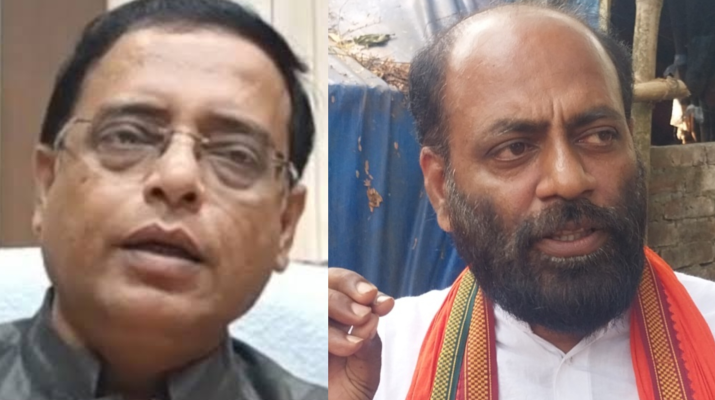
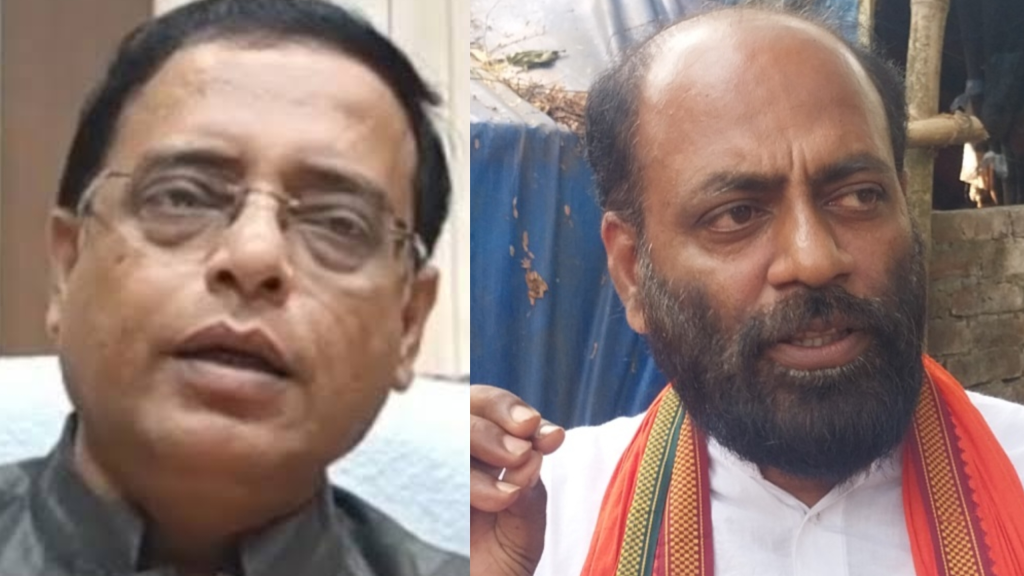
Hooghly, 31 March (H.S.) – As the 2026 West Bengal Assembly Elections approach, the Jangipara constituency in Hooghly district has become a focal point of contrasting political strategies and grassroots discontent.
A Multi-Cornered Contest in a Former Left Stronghold
HOOGHLY, West Bengal — Jangipara, a key segment of the Serampore Lok Sabha seat, is witnessing one of its most complex electoral battles in decades. While the region was historically a fortress for the Left Front, the All India Trinamool Congress (TMC) has held undisputed control since 2011. (With inputs from H.S.)
The incumbent, Snehasis Chakraborty, a postgraduate and former State Transport Minister, has represented the constituency for 15 years. The TMC is banking heavily on his administrative experience and the state’s wide-reaching welfare schemes to secure a fourth consecutive term. (With inputs from H.S.)
The “Mud House” Candidate: BJP’s Grassroots Push
The primary challenger to the TMC’s established leadership is the Bharatiya Janata Party’s (BJP) Prasenjit Bag. In a deliberate contrast to the political elite, the BJP is highlighting Bag’s modest lifestyle—noting that the Class XII-educated former RSS volunteer still resides in a mud house. (With inputs from H.S.)
Bag’s “son of the soil” image is reportedly gaining traction among rural voters who feel disconnected from high-level state politics. Having contested the seat previously, Bag possesses a deep understanding of the local organizational machinery and voter grievances. (With inputs from H.S.)
Complex Demographics and the ‘Furfura Sharif’ Factor
Jangipara is a socially diverse and politically sensitive constituency, characterized by a significant population of:
- Minority Voters: A substantial Muslim demographic.
- Caste Dynamics: Influential OBC and Scheduled Caste communities.
- Economic Profile: A largely rural economy driven by agriculture and daily wage labor. (With inputs from H.S.)
A decisive factor in this race is Furfura Sharif, a prominent Sufi pilgrimage center located within the constituency. The religious leadership here often sways minority voting patterns. With the CPI(M) fielding Sudipto Sarkar (backed by the Indian Secular Front/ISF) and the Congress nominating advocate Subhasish Dutta, the potential for a split in the minority vote has added a layer of unpredictability to the TMC’s traditional base. (With inputs from H.S.)
Local Grievances: Connectivity and Healthcare
Despite the incumbent serving as the former Transport Minister, infrastructure has emerged as the most significant “anti-incumbency” factor.
- Transport Decline: Residents allege that several bus routes have been discontinued, severely impacting students and daily commuters.
- Healthcare Crisis: Locals report a chronic shortage of doctors and equipment at Jangipara Hospital, forcing patients to travel long distances for basic medical care.
- Youth Unemployment: A lack of local industry continues to drive the youth to migrate to other states in search of manual labor and service jobs. (With inputs from H.S.)
Conclusion: Two Divergent Paths
The 2026 battle for Jangipara is a face-off between two distinct political identities. On one side stands the power and experience of the TMC’s administrative machinery; on the other is the simplicity and grassroots appeal of the BJP’s candidate. (With inputs from H.S.)
Whether the voters of Hooghly prioritize established governance or opt for a representative who mirrors their own lived economic realities will be determined when the state heads to the polls on April 9. (With inputs from H.S.)
Inputs & Images courtesy: Hindusthan Samachar (H.S.)
Last Updated on: Tuesday, March 31, 2026 3:51 pm by Bollu Dikshitha | Published by: Bollu Dikshitha on Tuesday, March 31, 2026 3:51 pm | News Categories: India, Politics
About The Author
