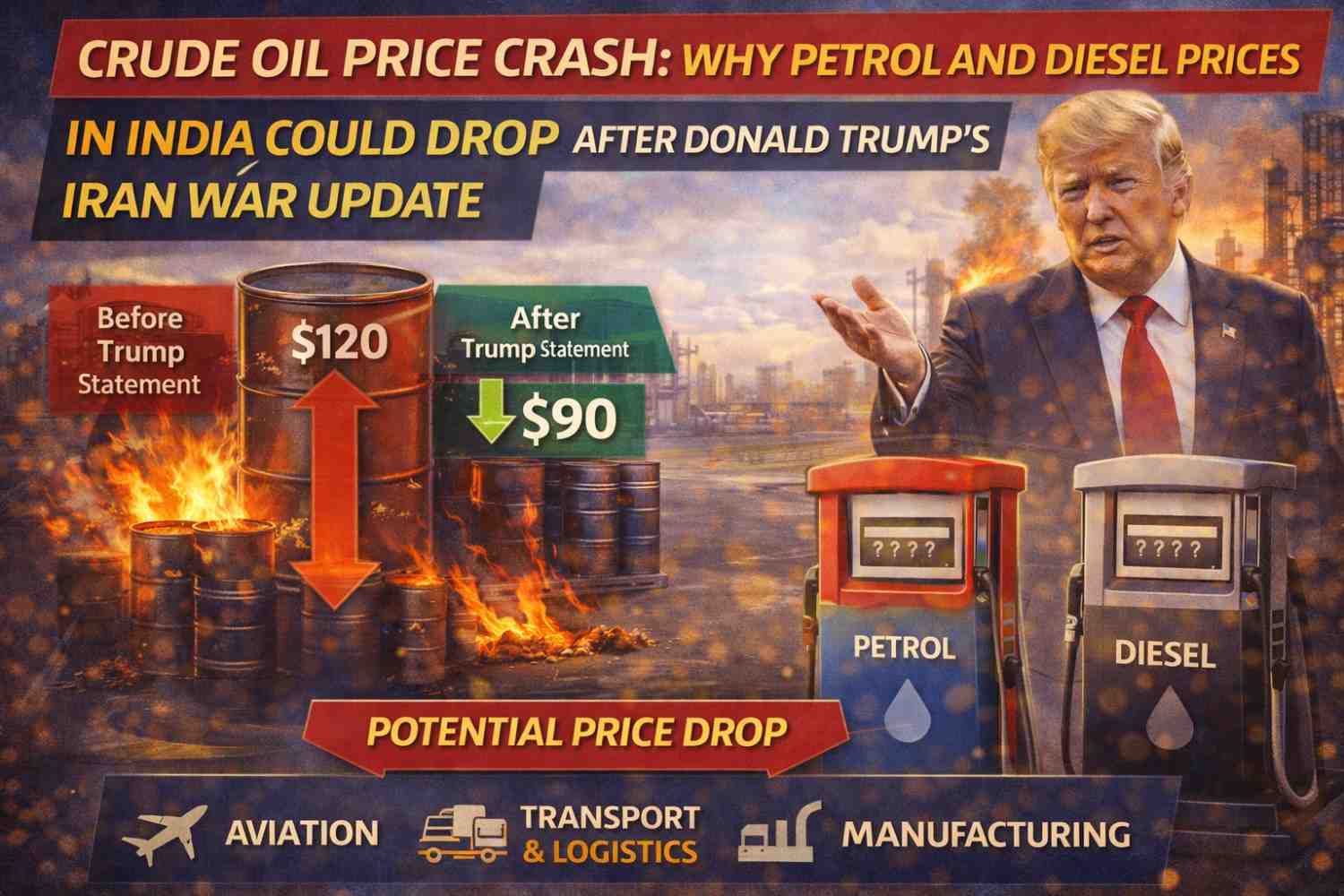
Global crude oil markets have experienced dramatic volatility after comments by former U.S. President Donald Trump suggested that the conflict involving Iran could end soon. The remarks triggered a rapid shift in investor sentiment, sending oil prices sharply lower after an earlier surge fueled by geopolitical tensions.
At the peak of market anxiety, international crude benchmarks had climbed close to $120 per barrel, reflecting fears that escalating tensions in the Middle East could disrupt global energy supplies. However, the market reversed course quickly after Trump indicated that a resolution to the conflict might be imminent. Within hours, crude prices dropped below $90 per barrel, creating one of the most significant short-term swings in oil markets in recent years.
The sudden volatility has major implications for energy-importing countries such as India, where fuel prices, inflation, and economic stability are closely tied to global crude oil trends.
Oil Markets React to Geopolitical Signals
Oil markets are extremely sensitive to geopolitical developments, particularly when they involve regions responsible for a large share of global energy production. The Middle East remains central to global oil supply, and any conflict involving major producers or key transit routes can quickly trigger price spikes.
The recent surge in oil prices was largely driven by concerns that the conflict could disrupt tanker routes or limit exports from Gulf producers. Traders feared that shipping lanes could be affected, especially the strategically critical Strait of Hormuz, through which a significant portion of the world’s oil supply passes every day.
However, when Trump suggested that diplomatic or military developments could soon bring the conflict to an end, markets quickly reassessed the likelihood of prolonged supply disruptions. This shift in expectations led to heavy selling in crude futures markets, pushing prices sharply lower.
The reaction demonstrates how energy markets often respond not only to actual supply disruptions but also to perceptions of geopolitical risk.
Why the $120 Oil Spike Happened
The rapid climb toward $120 per barrel was fueled by several overlapping factors that heightened market anxiety.
Concerns Over Supply Disruptions
Tensions in the Middle East raised fears that oil exports from key producers could be interrupted. Even the possibility of disruptions is enough to push prices higher because global oil supply chains are tightly balanced.
Strategic Shipping Routes at Risk
The Strait of Hormuz is one of the most important energy chokepoints in the world. Any conflict affecting shipping traffic in the region can lead to immediate price volatility.
Investor Speculation
Financial traders often move quickly in response to geopolitical signals. When tensions rise, investors frequently increase positions in oil futures as a hedge against potential supply shortages.
Together, these factors pushed prices sharply upward before the market correction began.
Trump’s Statement and the Market Reversal
The turning point came when Donald Trump indicated that the conflict could be “very close” to ending. While no official ceasefire announcement followed immediately, the remarks were enough to shift market sentiment.
Traders interpreted the statement as a signal that a prolonged military escalation might be avoided. If the conflict de-escalates, oil exports from the region would likely continue without major disruptions.
As a result, speculative positions in oil were quickly unwound, leading to a rapid decline in prices. Such reversals are not uncommon in commodity markets, where expectations about future supply and demand can change quickly.
Energy analysts caution that the situation remains fluid, and further geopolitical developments could still trigger additional volatility.
Why Oil Prices Matter for India
For India, fluctuations in global oil prices have direct economic consequences. The country imports more than 80 percent of its crude oil requirements, making it highly dependent on international energy markets.
When crude oil prices rise sharply, the impact can be felt across the economy. Fuel costs increase, transportation becomes more expensive, and inflationary pressure can build across multiple sectors.
Higher oil prices can also affect government finances because they influence subsidy spending, taxation policies, and trade balances.
Conversely, falling oil prices often provide relief to consumers and businesses. Lower crude prices reduce the cost of fuel imports and can help stabilize inflation.
Impact on Petrol and Diesel Prices
Although global oil prices have fallen sharply, the effect on petrol and diesel prices in India is not immediate.
Domestic fuel prices are influenced by several factors beyond international crude costs.
Exchange Rate Movements
Oil imports are priced in U.S. dollars. If the Indian rupee weakens against the dollar, the cost of imported crude can remain high even when global prices fall.
Taxes and Duties
Central and state taxes account for a significant portion of petrol and diesel prices in India. Changes in tax policies can influence pump prices as much as fluctuations in crude oil.
Refining and Distribution Costs
The cost of refining crude oil into usable fuels, along with transportation and retail distribution expenses, also affects final fuel prices.
Because of these variables, Indian consumers may not see an immediate reduction in petrol and diesel prices unless crude prices remain lower for a sustained period.
Effects on Key Indian Industries
The sharp drop in oil prices could benefit several sectors of the Indian economy if the decline continues.
Aviation
Airlines are among the biggest beneficiaries of falling oil prices because aviation turbine fuel is one of their largest operational expenses. Lower fuel costs can improve airline profitability and potentially reduce ticket prices.
Transportation and Logistics
Logistics companies and freight operators depend heavily on diesel. Lower fuel prices can reduce operating costs and improve margins across the supply chain.
Manufacturing
Energy costs play a major role in manufacturing operations. Lower oil prices can help reduce production expenses in industries that rely heavily on transportation and energy.
Inflation
Cheaper fuel can ease inflationary pressure, which may provide policymakers with greater flexibility in managing interest rates and economic growth.
Global Oil Market Uncertainty
Despite the recent price decline, analysts warn that oil markets remain highly uncertain.
Geopolitical tensions in the Middle East have historically caused repeated cycles of price spikes and corrections. Even small changes in the political landscape can quickly shift market sentiment.
In addition to geopolitical risks, other factors continue to influence oil prices:
- Production decisions by major oil-exporting countries
- Changes in global economic growth and energy demand
- Supply chain disruptions affecting shipping or refining
- Currency fluctuations and financial market speculation
Because of these dynamics, oil prices are likely to remain volatile in the near term.
What Analysts Are Watching
Energy analysts are closely monitoring several indicators that could determine the direction of oil prices in the coming weeks.
First, the geopolitical situation in the Middle East remains the most immediate factor influencing market sentiment. Any escalation or resolution could significantly alter supply expectations.
Second, decisions by major oil-producing nations regarding output levels will play an important role in shaping global supply.
Third, global economic growth trends will influence demand for oil. If economic activity slows in major economies, demand could weaken, placing additional downward pressure on prices.
Finally, currency movements and financial market sentiment will continue to influence commodity trading.
Implications for India’s Energy Strategy
The recent volatility underscores the importance of long-term energy planning for India. As one of the world’s largest oil importers, the country remains exposed to sudden fluctuations in global energy markets.
In response, India has been working to diversify its energy sources, expand strategic petroleum reserves, and increase investment in renewable energy.
These efforts aim to reduce the economy’s vulnerability to external energy shocks while ensuring stable energy supplies for long-term growth.
The latest oil price swing serves as another reminder that global energy markets are closely tied to geopolitics, and developments thousands of kilometers away can quickly influence fuel prices and economic conditions in India.
Last Updated on: Friday, March 13, 2026 11:43 pm by The Weekly News Team | Published by: The Weekly News Team on Tuesday, March 10, 2026 10:35 pm | News Categories: Business
About The Author