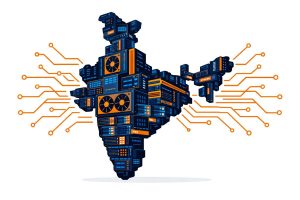
How the India AI Impact Summit 2026 Is Shaping National AI Policy and Innovation
New Delhi — **India’s ambition to become a major centre for ethical, inclusive and sovereign artificial intelligence (AI) took a definitive step forward with the India AI Impact Summit 2026, held from February 16 to 20 at Bharat Mandapam in the national capital. The week‑long summit brought together policymakers, industry leaders, global AI experts and academia to deliberate on the future of AI policy, governance frameworks and the tech landscape in India and the Global South. (Prime Minister of India)
The gathering — which drew participation from over 100 countries, heads of state and government officials, prominent CEOs, and thousands of innovators — was more than a conference. It was a concrete demonstration of how India is positioning itself at the forefront of AI innovation, policy strategy and global cooperation. (Prime Minister of India)
This article presents a detailed, fact‑based analysis of what happened at the summit, what was announced and why this event is generating intense interest among Indian policymakers, startups, multinationals and everyday citizens searching for “AI policy”, “AI summit outcomes”, and “India’s AI strategy”.
Summit Overview: Scale, Scope and Strategic Intent
The India AI Impact Summit 2026 was inaugurated with broad strategic goals, backed by the Indian government’s determined push to make AI a force for inclusive development. The summit’s overarching theme was “Sarvajan Hitaya, Sarvajan Sukhaya” — welfare and happiness for all — signalling a human‑centric framework for AI policy and national planning. (Prime Minister of India)
Participation & Global Profile
- Leaders from government, technology, academia and civil society attended, including heads of state and representatives from multilateral bodies. (ABP News)
- More than 500 forums, discussions and panels were scheduled across the event, covering ethics, safety, governance, infrastructure and sectoral AI applications. (The Times of India)
- Participants included innovation leaders from Silicon Valley, global AI research institutions, and representatives of emerging AI ecosystems across the Global South. (The Economic Times)
The international presence — including CEOs from major tech firms — underscored India’s growing role not just as a consumer of AI, but as a contributor to global AI policy and innovation. (AajTak)
Setting the Policy Agenda: Human‑Centric and Inclusive AI
One of the summit’s central policy thrusts was India’s articulation of a distinct approach to AI governance — one that balances rapid innovation with ethical and inclusive deployment across society.
MANAV Framework: Principles for Responsible AI
At the summit, the Government of India formally unveiled the MANAV principles — an ethical framework for AI governance built around:
- Moral
- Accountable
- National sovereignty
- Accessible
- Valid
These principles are designed to guide not only national policy but also cross‑sectoral adoption of AI in public services, enterprise, and research. (Nadcab Labs)
The framework emphasises that AI should be used responsibly, respecting data privacy, fairness, transparency and accountability from conception through deployment.
Three Sutras and Seven Chakras
Policy discussions were structured around Three Sutras — People, Planet and Progress — and Seven Chakras, which focused on thematic pillars such as trusted AI, human capital development, inclusion, innovation and democratization of AI resources. (Prime Minister of India)
This layered approach ensured that policy dialogues didn’t remain conceptual but translated into actionable agendas across sectors such as healthcare, education, agriculture and governance.
Priority Sectors: AI for Social Good and Economic Growth
Across conference halls and panel sessions, one recurring theme was AI’s applicability beyond narrow tech use‑cases — specifically, its potential to address long‑standing developmental challenges.
Healthcare & Diagnostics
AI tools showcased at the summit included platforms for:
- AI‑assisted diagnostics and tele‑medicine services
- Benchmarking open data platforms for health model training that protect patient privacy
- Predictive epidemiology tools for early disease detection
These solutions demonstrated how AI models could augment the healthcare infrastructure in both urban and rural settings. (Nadcab Labs)
Agriculture & Climate Resilience
Initiatives such as the Bharat VISTAAR platform were introduced to deliver real‑time, location‑specific advisory services to farmers — including pest alerts, weather insights and irrigation recommendations. (Nadcab Labs)
Also highlighted were collaborations using neural models for monsoon forecasting and sustainability planning, potentially transforming resilience strategies for agriculture in climate‑vulnerable regions.
Education & AI Skills
To expand AI literacy and access across India’s vast student population, the summit promoted programmes such as:
- YUVAi — a national initiative encouraging students to build real‑world AI solutions
- AI Pragya — focused on democratising AI education beyond urban centres
These schemes aim to bridge gaps in AI skills, particularly in Tier 2 and Tier 3 cities, enabling equitable participation in the digital economy. (Nadcab Labs)
Infrastructure and Capability Building: Sovereign AI
A defining strand of the summit was India’s push for sovereign AI capabilities — reducing dependency on foreign AI models and cloud infrastructure, and instead fostering indigenous innovation.
Indigenous AI Models
India unveiled its own large language models and AI stacks during the summit:
- Homegrown AI systems with multi‑billion parameter scales supporting all 22 scheduled Indian languages
- Government‑supported compute infrastructure expansions such as increasing GPU capacity — aimed at supporting research and enterprise adoption at scale. (Nadcab Labs)
These moves are aligned with wider national goals of data sovereignty and balanced market competition. Verifiable, locally engineered models help mitigate risks associated with vendor lock‑in and external control over critical AI resources. (FGIT)
International Alliances
India also formalised its membership in global coalitions such as Pax Silica, aimed at diversifying semiconductor supply and strengthening strategic technology partnerships — a move with significant implications for compute power and national AI resilience. (Nadcab Labs)
Economic Mobilisation: Funding, Investment and Startup Growth
Beyond policy dialogue, the summit catalysed substantial investment commitments:
- Governments and institutional investors reiterated support for AI research funding and infrastructure
- Venture capital initiatives were fast‑tracked to support deep‑tech startups and global AI market integration. (Build MVP Fast)
These developments indicate that India’s AI agenda is not only policy‑led but also investment‑driven, supporting a broader innovation ecosystem.
Summit Record & Public Engagement
The summit also drew remarkable civilian participation:
- A nationwide campaign to promote responsible AI adoption collected over 250,000 AI responsibility pledges in a 24‑hour window, earning a Guinness World Record. (Nadcab Labs)
This public engagement component underscores the event’s dual focus on both technical governance and societal awareness.
Challenges and Critical Concerns
While the summit highlighted ambitious goals, experts have pointed out ongoing structural challenges, including:
- Infrastructure strain due to data centre energy and water demands as AI scaling accelerates
- The absence of a unified national data centre policy
- Institutional gaps in regulatory frameworks for AI incidents and algorithmic accountability. (The Indian Express)
Addressing these concerns will be central to translating summit outcomes into durable policy and implementation pathways.
What India AI Impact Summit Means for the Future
The India AI Impact Summit 2026 is a watershed moment in the country’s AI policy evolution — uniting global voices, promoting indigenous capability and shaping a roadmap that prioritises inclusion, ethics and sovereignty. Its influence is already visible in new governance frameworks, sectoral AI strategies, public engagement milestones and investment pipelines.
For Indian audiences eager to understand how national AI policy will affect technology adoption, jobs, applications and economic growth, the summit’s outcomes point to a future where AI is not only a tool for innovation but also a platform for inclusive development and global collaboration.
As follow‑up initiatives emerge and policy instruments are refined in the months ahead, the India AI Impact Summit 2026 stands as a benchmark for how emerging economies can lead — not just participate — in the global AI era.
This article is based on verified news and official statements related to the India AI Impact Summit 2026. No speculative claims are made; readers are encouraged to consult official summit documentation or government releases for updates.
Last Updated on: Tuesday, March 3, 2026 2:59 pm by The Weekly News Team | Published by: The Weekly News Team on Tuesday, March 3, 2026 2:59 pm | News Categories: Technology
About The Author