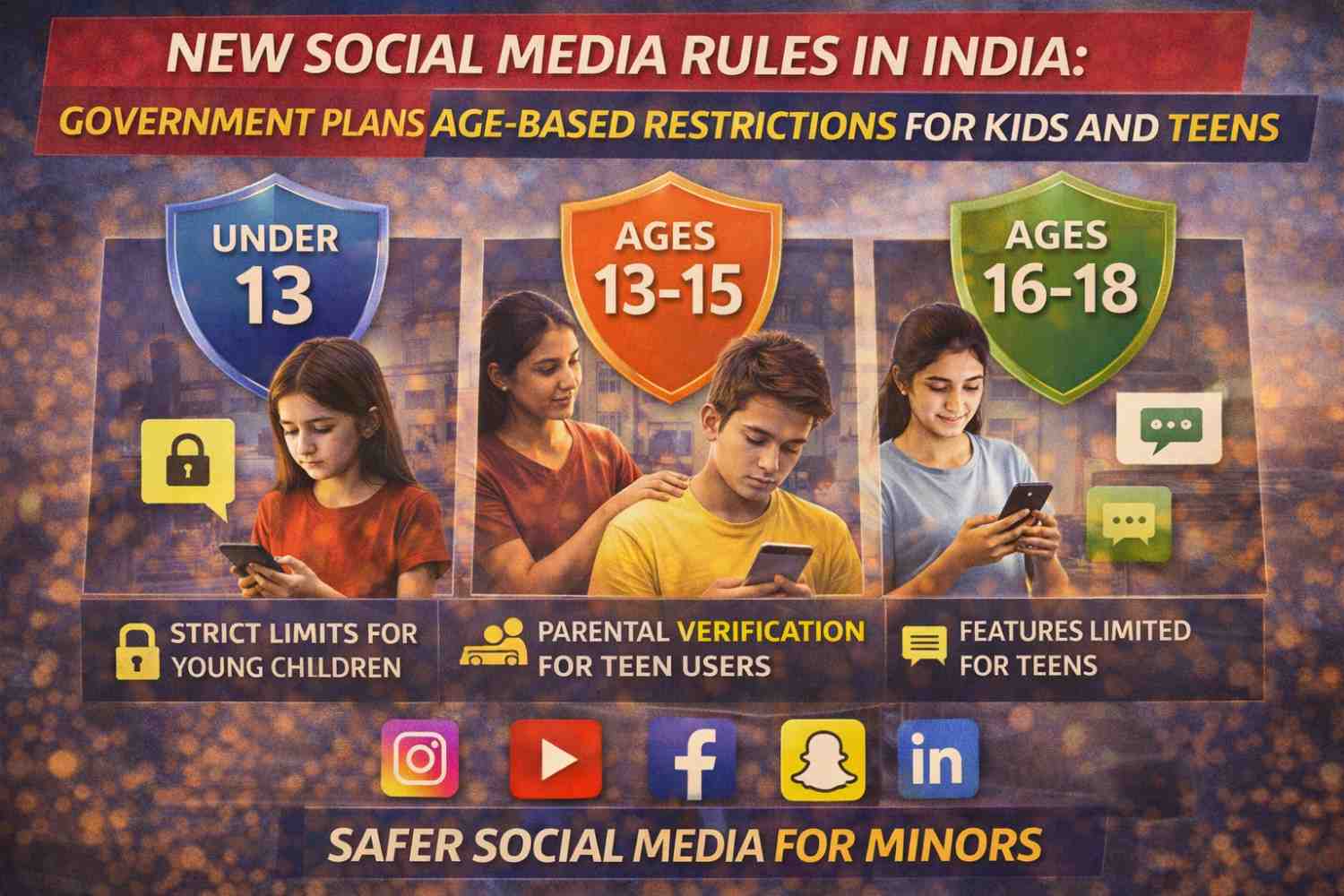
The Government of India is exploring a new framework of graded age-based restrictions on social media platforms aimed at protecting children and teenagers from online harm. The proposed policy, currently under discussion at the central government level, seeks to create a safer digital ecosystem for minors by introducing different levels of access depending on a user’s age.
Officials from the Ministry of Electronics and Information Technology are evaluating regulatory options that could require social media companies to implement safeguards for younger users. These measures may include stricter account verification systems, limits on certain features for minors, and enhanced parental control mechanisms.
The move comes amid growing concerns worldwide about the impact of social media on children’s mental health, online safety, and digital well-being. With millions of young Indians actively using social networking platforms, policymakers are increasingly examining how to balance digital freedom with necessary protections.
Why the Government Is Considering Age-Based Restrictions
India has one of the largest populations of young internet users in the world. The rapid expansion of affordable smartphones and mobile data has made social media platforms widely accessible to children and teenagers across the country.
While digital connectivity offers educational and social benefits, it also exposes minors to risks such as cyberbullying, harmful content, online exploitation, and excessive screen time. These concerns have prompted policymakers to consider stronger regulations that could limit exposure to inappropriate or unsafe digital environments.
The government’s proposal to introduce graded access based on age groups reflects an attempt to tailor digital protections according to the maturity and vulnerability of different age categories.
What “Graded Age-Based Restrictions” Could Mean
Although the final framework has not yet been announced, the concept of graded restrictions suggests that social media access could vary depending on a user’s age bracket.
Possible approaches under consideration include:
Limited Access for Younger Children
Children below a certain age threshold may face stricter limitations when using social media platforms. This could involve restrictions on creating accounts independently or accessing certain types of content.
Parental Consent for Teen Users
Teenagers may be allowed to use platforms with parental approval, with additional safety settings automatically enabled for accounts registered under a specific age.
Feature Restrictions
Some features — such as direct messaging with unknown users, algorithm-driven content recommendations, or live streaming — could be limited for younger users to reduce exposure to harmful interactions.
Age Verification Systems
Platforms may be required to introduce stronger age-verification mechanisms to ensure minors cannot easily bypass restrictions.
These measures would likely apply to major platforms used widely by young audiences, including apps such as Instagram, Facebook, YouTube, and Snapchat.
Rising Global Concern About Children’s Online Safety
India’s discussions mirror similar policy debates taking place across multiple countries as governments attempt to address the risks associated with social media use among minors.
Research and advocacy groups have raised concerns about how algorithm-driven platforms can amplify harmful content, encourage addictive behavior, and expose young users to cyberbullying or harassment.
Several governments around the world are considering or implementing stricter regulations that require social media companies to protect minors more effectively. Measures being debated internationally include stronger age verification, limits on targeted advertising to children, and default privacy settings for young users.
By exploring graded restrictions, India may join a growing group of nations seeking to strengthen digital safety standards for younger internet users.
The Role of the IT Ministry and Policy Framework
The Ministry of Electronics and Information Technology is expected to play a central role in shaping the proposed regulatory framework.
India already has digital governance rules under the Information Technology Act 2000 and subsequent intermediary guidelines that regulate online platforms. However, policymakers believe additional safeguards may be required specifically for children.
Officials have indicated that the new approach could involve collaboration between government agencies, social media companies, child rights experts, and digital policy researchers to ensure that regulations remain practical and enforceable.
The framework may also align with broader digital governance efforts, including strengthening online accountability and promoting responsible platform design.
How Social Media Companies Could Be Affected
If the government introduces age-based restrictions, technology companies operating in India may need to redesign certain aspects of their platforms to comply with the new rules.
Possible changes could include:
- Mandatory age-verification tools during account creation
- Automatic safety settings for users under a specified age
- Restrictions on data collection from minors
- Limits on personalized algorithmic recommendations for young users
- Enhanced reporting and moderation systems for harmful content
These requirements could increase compliance responsibilities for technology companies but may also push platforms to adopt safer design standards for younger audiences.
India represents one of the largest digital markets globally, making regulatory changes in the country particularly significant for international technology companies.
Concerns About Implementation and Privacy
While the idea of protecting children online has broad public support, experts note that implementing age-based restrictions presents several practical challenges.
One key issue is how platforms will verify users’ ages without compromising privacy or collecting excessive personal data. Age-verification systems can sometimes require identity documents or biometric data, which raises concerns about data protection.
Another challenge involves enforcement. Young users often find ways to bypass digital restrictions by entering false birthdates or using accounts created by adults.
Policymakers therefore face the complex task of designing safeguards that are both effective and respectful of users’ privacy rights.
Impact on Parents, Schools, and Young Users
If implemented, the proposed rules could significantly influence how children interact with social media in India.
Parents may gain stronger tools to monitor and control their children’s online activities, including access to content filters and usage limits.
Schools and educators may also play a role in promoting digital literacy and responsible online behavior among students. Digital safety awareness programs could become an important complement to regulatory measures.
For teenagers, the new rules could introduce structured digital boundaries while still allowing access to the social and educational benefits of online platforms.
India’s Growing Focus on Digital Safety
The discussion around age-based social media restrictions reflects a broader shift in India’s approach to digital governance.
As internet adoption continues to expand rapidly, policymakers are increasingly focused on ensuring that digital technologies develop in ways that protect users, particularly vulnerable groups such as children.
Efforts to strengthen online safety have included initiatives targeting misinformation, cybercrime, and harmful content. Protecting minors from digital risks has now emerged as a key priority within that broader policy agenda.
The government’s exploration of graded restrictions suggests that India may soon adopt a more structured regulatory approach to children’s online experiences.
What Happens Next
The proposal is still under evaluation, and no final rules have yet been announced. The government is expected to consult with industry stakeholders, technology experts, and child protection organizations before finalizing any regulatory framework.
If implemented, the new policy could represent one of India’s most significant steps toward regulating social media platforms for the safety of younger users.
The outcome of these discussions will be closely watched by technology companies, parents, educators, and digital policy observers, as India seeks to balance innovation, user freedom, and the need to create a safer online environment for the next generation.
Last Updated on: Friday, March 13, 2026 11:56 pm by The Weekly News Team | Published by: The Weekly News Team on Tuesday, March 10, 2026 10:36 pm | News Categories: Technology
About The Author