Introduction
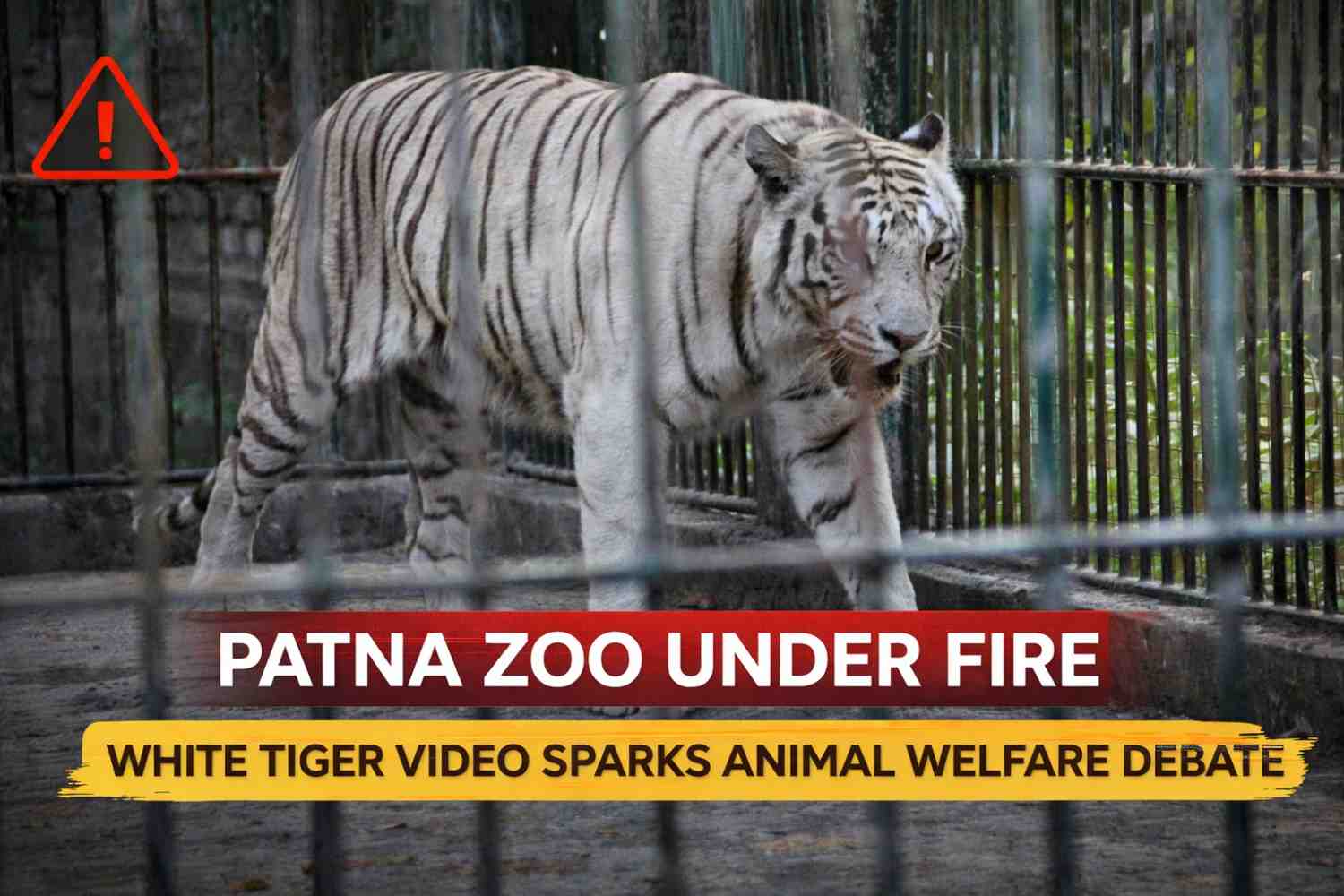
A viral video allegedly showing a white tiger in distress at Sanjay Gandhi Biological Park in Patna has ignited a nationwide debate on animal welfare standards in Indian zoos. Widely circulated across social media platforms, the footage appears to show the animal pacing repeatedly inside its enclosure—behavior that experts often associate with stress in captive wildlife.
The video has triggered strong public engagement, with users raising concerns about the living conditions of animals in captivity and demanding accountability from zoo authorities. As discussions intensify, animal welfare groups and conservation experts are calling for closer scrutiny and systemic reforms.
What the Viral Footage Reveals
The viral clip, though brief and lacking full context, shows a white tiger moving back and forth along a fixed path inside its enclosure. This repetitive pacing is commonly referred to as “stereotypic behavior” in animal science.
Experts note that such behavior may indicate:
- Lack of environmental enrichment
- Limited space or stimulation
- Psychological stress due to confinement
However, specialists also caution against drawing definitive conclusions from short viral clips alone. Animal behavior can vary based on time of day, feeding schedules, or external disturbances.
Why the Issue Is Gaining Traction Online
The strong public reaction to the video reflects broader digital trends where emotionally charged content—particularly involving animals—drives high engagement.
Several factors are contributing to the issue trending across platforms:
Emotional Impact
Visual content involving animals often evokes immediate empathy, prompting users to share and comment.
Growing Awareness
There is increasing public awareness around ethical treatment of animals, especially in captivity.
Amplification by Influencers
Animal rights activists and social media influencers have reshared the footage, expanding its reach and shaping the narrative.
Search trends indicate rising queries such as “Patna Zoo white tiger condition,” “animal welfare in Indian zoos,” and “are zoos safe for animals in India.”
Animal Welfare Groups Raise Key Demands
In response to the viral video, animal welfare organisations and activists have outlined several concerns and demands. While official statements may vary, the broader expectations include:
Independent Investigation
Calls for a transparent inquiry into the condition of the tiger and the overall management of the enclosure.
Improved Living Conditions
Demands for enhanced enclosure design, including more space, natural elements, and environmental enrichment.
Regular Monitoring
Advocacy for stricter and more frequent inspections by regulatory authorities.
Behavioral Enrichment Programs
Experts emphasize the need for activities that stimulate natural instincts, reducing stress-related behaviors.
These demands reflect ongoing debates around the ethical management of wildlife in captivity.
Zoo Authorities and Regulatory Oversight
Zoos in India operate under guidelines set by the Central Zoo Authority (CZA), which establishes standards for animal housing, healthcare, and enrichment. Facilities are expected to comply with these norms to ensure animal well-being.
In cases where concerns are raised, authorities may conduct inspections and seek reports from zoo management. Any verified violations can lead to directives for corrective action.
As of now, official clarification regarding the specific viral footage remains limited, and further verification is awaited.
Understanding White Tigers in Captivity
White tigers are not a separate species but a genetic variation of Bengal tigers. Due to their rarity and visual appeal, they are often featured in zoos, which can attract public interest.
However, experts have long debated the ethics of breeding and displaying white tigers, citing concerns such as:
- Genetic issues due to selective breeding
- Increased vulnerability to health problems
- Challenges in maintaining appropriate living conditions
These factors add complexity to the ongoing discussion around their welfare.
The Larger Debate: Zoos and Animal Ethics
The Patna Zoo controversy has reignited a broader conversation about the role of zoos in modern society.
Conservation vs Captivity
Supporters argue that zoos contribute to conservation, education, and species protection. Critics counter that captivity may compromise animal welfare.
Changing Public Expectations
There is a noticeable shift toward demanding more humane and naturalistic environments for captive animals.
Need for Transparency
Public trust increasingly depends on how openly institutions address concerns and implement improvements.
Impact on Public Perception
The viral video has influenced how people perceive not just Patna Zoo, but zoological parks across India.
Key impacts include:
- Heightened scrutiny of animal enclosures
- Increased interest in ethical tourism
- Greater public engagement in wildlife issues
Digital platforms have effectively turned a single incident into a nationwide conversation, demonstrating the power of social media in shaping public discourse.
What Visitors Should Know
For those planning to visit zoos in India, awareness is essential:
- Observe animal behavior responsibly without disturbing them
- Follow zoo guidelines and avoid actions that may stress animals
- Support institutions that prioritize animal welfare and conservation
Responsible tourism plays a role in encouraging better standards.
Conclusion
The viral white tiger video from Patna Zoo has become a focal point for wider concerns about animal welfare in India. While the full context of the footage is still under review, the public reaction underscores a growing demand for accountability, transparency, and improved conditions for captive wildlife.
As authorities and experts assess the situation, the incident serves as a reminder that animal welfare is not just a regulatory issue but a societal responsibility. The outcome of this debate could influence how zoos operate and evolve in the years ahead, aligning more closely with modern expectations of ethical and humane treatment.
Last Updated on: Thursday, March 5, 2026 12:13 am by The Weekly News Team | Published by: The Weekly News Team on Wednesday, March 4, 2026 8:20 pm | News Categories: India
About The Author