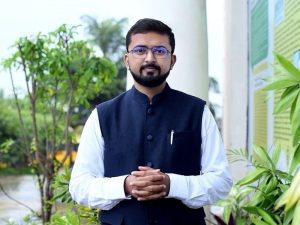
Senior Aam Janata Unnayan Party leader Sahriyar Mallik alleges barren land was available for Tata project; targets Left, TMC, BJP over governance and political strategies.
Introduction
Hooghly, April 20: Sahriyar Mallik, a former CPI(M) panchayat pradhan and now a senior leader of the Aam Janata Unnayan Party, on Monday made fresh claims regarding the long-standing Singur land controversy. Addressing the issue, he alleged that an alternative land option for the Tata Motors project had been identified but was overlooked by the then Left Front government.
Key Announcements / Highlights
- Mallik claimed that around 3,000 bighas of barren land had been identified in 2003 as an alternative site.
- He alleged that the CPI(M) leadership chose fertile agricultural land instead.
- Criticised CPI(M), TMC, and BJP for their roles in state politics.
- Raised concerns about governance and law and order in West Bengal.
- Positioned his party as an emerging political alternative.
Claim on Alternative Land for Tata Project
Mallik stated that during his tenure as pradhan of Panchghora Gram Panchayat in 2003, he facilitated the identification of approximately 3,000 bighas of vested, non-cultivable land located about 10 kilometres away from the proposed factory site in Singur.
He claimed that this land was assessed in coordination with some officials linked to Tata Motors. However, according to him, the CPI(M)-led government at the time did not consider this option and instead proceeded with acquiring fertile, multi-crop agricultural land for the project.
Official Context: Singur Dispute and Supreme Court Verdict
The Singur land issue remains one of West Bengal’s most significant industrial controversies. The Tata Motors Nano car project, initially planned in Singur, faced widespread protests over land acquisition.
In 2016, the Supreme Court ruled that the land acquisition process was illegal and ordered the return of land to farmers. Following prolonged protests and legal battles, Tata Motors had already withdrawn from the project and relocated operations to Gujarat.
Political Allegations Against Major Parties
Mallik criticised the CPI(M), alleging that public dissatisfaction with its handling of the Singur issue contributed to its electoral decline and the rise of the Trinamool Congress (TMC).
He further claimed that several former CPI(M) members later joined the TMC and continued to influence governance.
Targeting both the TMC and the BJP, Mallik accused them of focusing on “allowance-based politics” rather than long-term development. He also alleged that the BJP is attempting to polarise voters along religious lines.
Remarks on Governance and Minority Outreach
Mallik also criticised the state government led by Chief Minister Mamata Banerjee, alleging inadequate delivery of benefits to the Muslim community. He further claimed that religious figures such as imams have been drawn into political influence, though he did not provide specific evidence for these assertions.
He expressed concern over the current law and order situation in the state, suggesting that governance has weakened in recent years.
Public Impact and Political Outlook
The Singur land dispute continues to influence political discourse in West Bengal, particularly around issues of land rights, industrialisation, and farmer consent. Mallik’s claims, if substantiated, could revive debate over alternative approaches that might have avoided conflict.
Positioning his party as a growing political force, Mallik said the Aam Janata Unnayan Party aims to offer a governance-focused alternative. He expressed confidence that voters disillusioned with existing parties may support his party in upcoming elections.
Conclusion
While Mallik’s claims add a new dimension to the Singur narrative, they remain unverified and reflect his political stance. The controversy continues to shape political narratives in West Bengal, with land policy and governance remaining central issues ahead of future electoral contests.
Last Updated on: Monday, April 20, 2026 9:53 pm by Bollu Dikshitha | Published by: Bollu Dikshitha on Monday, April 20, 2026 9:53 pm | News Categories: India
About The Author